


GUIDE

Regressions + Sleep Training

A regression doesn't mean sleep training failed. Here's how to decide whether to pause, continue, or adjust — based on where you are in the process.

Three scenarios, three different answers. Find yours below.

This Is One of the Hardest Moments in Early Parenthood

You've made a decision about sleep — maybe you started a method, maybe you completed one, maybe you were just about to begin — and now a regression has thrown everything into question. The timing feels cruel, and the internet is full of conflicting advice about what to do next.

Here's what you actually need: a framework for deciding, based on where you are in the process. Not a single "right answer" that applies to every family, but a way to think through your specific situation and make a choice you can commit to.

We're not going to tell you which sleep training method to use. We're not going to advocate for any particular approach. Whatever you've chosen — gentle, gradual, structured, or something in between — is valid. What matters now is figuring out how a regression fits into that picture and whether to pause, push through, or adjust.

For background on what's causing the regression itself, our guide to sleep regression causes covers the developmental science. And the sleep regression timeline can help you figure out which regression you're likely dealing with.

Three Scenarios, Three Different Answers

Where you are in the sleep training process changes everything about what to do next. Find your scenario below.

Scenario 1: You haven't started sleep training yet

You were planning to start, and then a regression hit. Should you push through anyway? In most cases, no. During a regression, your baby's brain is processing a major developmental leap — new motor skills, cognitive changes, separation anxiety, or all three at once. Layering a brand-new sleep approach on top of that is asking a lot of everyone. Your baby is already dealing with disrupted sleep for biological reasons. Adding a new set of expectations can increase stress without giving you a fair shot at seeing results. Wait for 1-2 weeks of relatively stable sleep after the regression passes, then begin. You'll get a much clearer read on what's working, and your baby will have the bandwidth to learn something new.
Scenario 2: You're in the middle of sleep training

This is the hardest one. You've put in the effort, you've had some rough nights, and now a regression is muddying the picture. The answer depends on how far along you were. If you just started (first 1-3 days), it can be very difficult to tell what's regression and what's adjustment. Consider pausing for a week, keeping your bedtime routine consistent, and restarting once things settle. If you were making clear progress (5+ days in, seeing improvement), staying the course is usually the better call. Your baby was already learning the new expectations. Abandoning the approach mid-process and then restarting later means they have to go through the adjustment period twice. Stay consistent with whatever method you chose, keep your responses predictable, and ride it out. The regression will pass, and the skills you were building will still be there.

Scenario 3: Sleep training was done and a regression hit

This is actually the most straightforward scenario, even though it doesn't feel like it at 3 AM. If your baby had genuinely learned to self-settle before the regression, those skills haven't disappeared. They're temporarily disrupted by developmental changes — the same way a toddler who knows how to walk might get wobbly during a growth spurt. Your baby's brain is busy, and sleep is taking the hit. The skills are still there. Stay consistent with your approach. Don't introduce new sleep associations (feeding or rocking all the way to sleep) that weren't part of your routine before. Respond the same way you were responding before the regression started. Most babies who were sleeping independently before the regression return to that pattern within 1-3 weeks without any retraining.

If you're not sure which scenario fits you, here's a simple test: was your baby consistently falling asleep independently before the regression started? If yes, you're in Scenario 3, and the skills are still there. If you were in the process of teaching that skill, you're in Scenario 2. If you hadn't begun yet, you're in Scenario 1.

The One Rule That Applies to All Three Scenarios

Regardless of whether you pause, push through, or adjust, one principle matters more than anything else: consistency.

Consistency doesn't mean rigidity. It doesn't mean ignoring your baby's needs or refusing to offer comfort. It means that your baby can predict what to expect from you. It means your response at midnight is the same as your response at 3 AM. It means the routine stays the routine, even when the results are temporarily worse.

Research on infant sleep consistently shows that the specific method parents use matters far less than how consistently they apply it. Babies learn through repetition and predictability. During a regression, when their internal world is chaotic from developmental changes, external predictability becomes even more important.

Consistency in Practice

  • Whatever method you're using, keep using it. Switching approaches mid-regression adds confusion on top of developmental chaos.
  • Respond the same way tonight that you responded last night. Predictability is calming for a baby whose brain is in overdrive.
  • Keep your bedtime routine identical. Same steps, same order, same timing. The routine is an anchor when everything else feels unstable.
  • Don't compare your approach to anyone else's. The method matters far less than your ability to stick with it consistently.
  • If you need to offer extra comfort during the regression, do it — but try to keep it within the framework of your existing approach rather than replacing it entirely.
  • Accept that some nights will be worse than others. Consistency doesn't mean perfection — it means your baby can predict what to expect from you.

Consistency is not about being perfect. It's about being predictable. Your baby is looking for patterns they can rely on — give them that, and you're doing the most important thing right.

The biggest risk during a regression isn't the regression itself — it's abandoning an approach that was working (or starting to work) and replacing it with something reactive and inconsistent. That's how temporary disruptions become permanent habits.

Practical Tips for Getting Through It

Track sleep before making any decisions

Exhaustion distorts your sense of how bad things actually are. A sleep log — even a simple one — gives you objective data. You might discover that sleep is disrupted but not as catastrophic as it feels at 2 AM. Or you might confirm that yes, things really have fallen apart, and that clarity helps you decide what to do next.

Give any decision at least 3-5 days

Whether you decide to pause, push through, or adjust, commit to that decision for at least 3-5 days before changing course. Switching strategies every night is the one approach that consistently doesn't work. Your baby needs enough time to understand what's happening before you can evaluate whether it's helping.

Protect bedtime above everything else

If you can only be consistent about one thing, make it bedtime. The first fall-asleep of the night sets the tone for everything that follows. Naps can be messier during a regression — that's survivable. But keeping bedtime predictable gives your baby the strongest possible foundation.

Lower the bar on everything else

A regression during sleep training is one of the most exhausting combinations in early parenthood. This is not the week to meal prep, deep clean, or catch up on emails. Survival mode is a legitimate strategy. Order takeout. Let the laundry pile up. Ask for help if you have it available.

Watch your baby, not just the clock

During a regression, wake windows may shift. Your baby might need slightly shorter wake windows if they're sleeping poorly at night, or slightly longer ones if the developmental leap is making them more alert. Pay attention to their sleepy cues rather than rigidly following a schedule that worked last week.

What No One Tells You

A regression is not evidence that sleep training failed

This is the most important thing to understand. Regressions are developmental — they happen to every baby regardless of how they fall asleep. Sleep-trained babies have regressions. Co-sleeping babies have regressions. Babies who were never formally trained have regressions. The regression is caused by brain development, not by your parenting approach. If someone (including your own inner critic) suggests the regression means your method didn't work, that's simply not how infant sleep science works.

Your baby may surprise you

Many parents brace for a full regression reset and then find that their baby bounces back faster than expected. Babies who have already developed self-settling skills often have shorter and milder regressions. The skills act as a buffer — your baby still wakes between sleep cycles (that's what a regression does), but they have tools to get back to sleep. You may not even notice some regressions if your baby handles them independently.

The guilt is normal but not useful

If you're second-guessing every decision — should I have paused? should I have kept going? am I doing this wrong? — you're in very good company. Every parent navigating this intersection feels the same doubt. The truth is, there's no single right answer. There's the answer that works for your family, your baby's temperament, and your capacity right now. That's enough.

Two steps forward, one step back is the actual pattern

Sleep progress — with or without formal training — is never a straight line. Regressions are the most dramatic example of this, but even within a regression, you'll see good nights mixed with terrible ones. Zoom out. Look at the week-over-week trend, not the night-to-night swings. The trajectory matters more than any single data point.

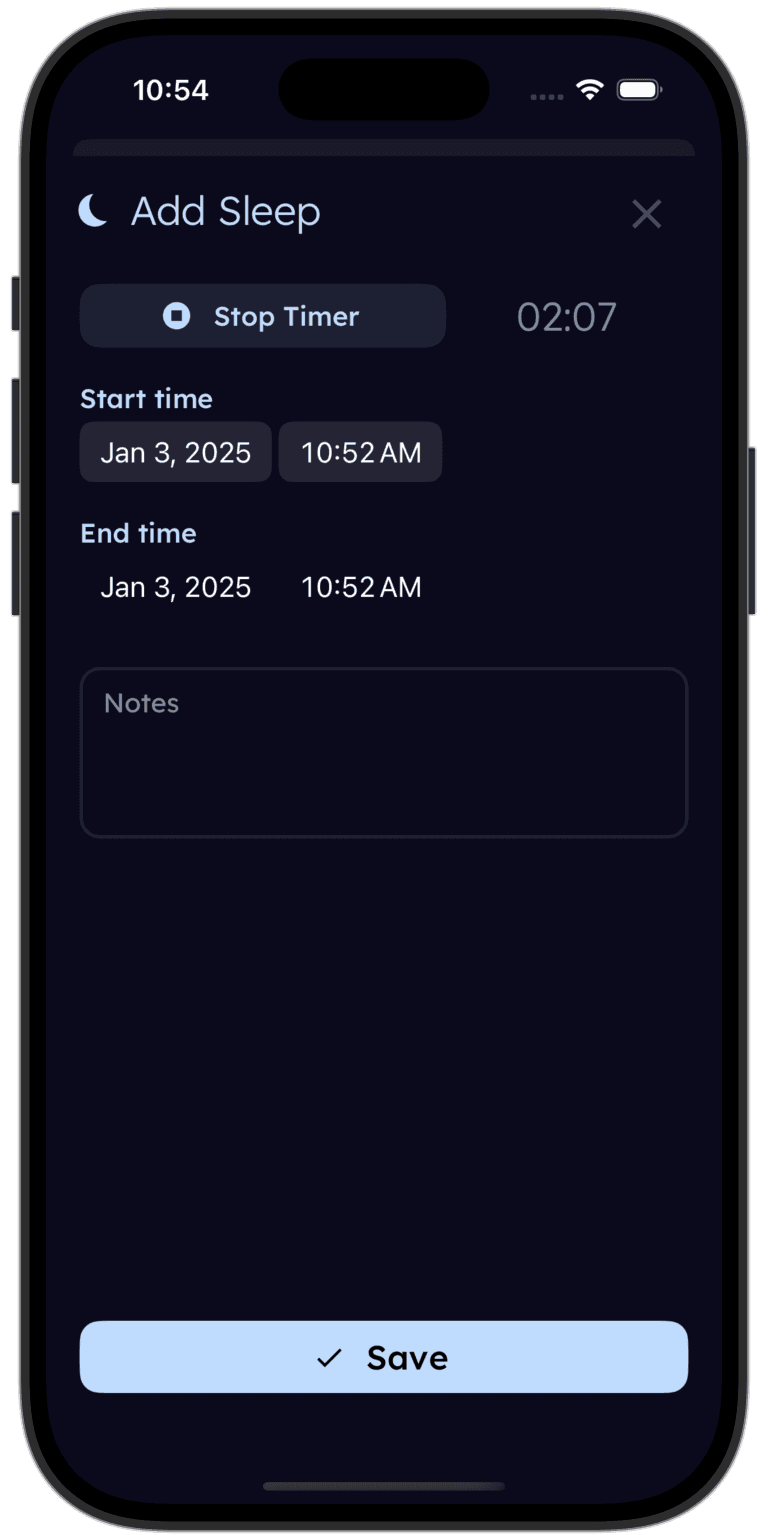
tinylog sleep tracker showing sleep patterns during a regression and sleep training

Data beats guesswork — especially when you're exhausted.

Log sleep in a couple of taps and let tinylog show you whether things are actually getting worse or if sleep deprivation is distorting the picture. More parents say 'I didn't realize it was improving' than any other feedback we get. Track the trend, not the feeling.

Download on the App StoreGet It On Google Play

When to Talk to Your Pediatrician

  • The regression has lasted more than 6 weeks with no improvement at all
  • Your baby seems to be in genuine pain or distress — not just fussy, but inconsolable
  • Sleep disruption is accompanied by other symptoms: fever, pulling at ears, changes in feeding, or unusual fussiness during the day
  • You notice breathing changes during sleep — snoring, pauses, or labored breathing
  • Your baby's weight gain has stalled or feeding patterns have changed significantly
  • You're concerned that the sleep disruption is beyond what a typical regression looks like
  • Your own mental health is suffering — persistent anxiety, hopelessness, or an inability to function during the day are signs you need support too

A regression during sleep training is stressful, but it's normal. What's not normal is suffering through it without support. If something feels off — with your baby or with you — reach out. You don't need a dramatic reason. 'I'm exhausted and I'm worried' is more than enough.

The Big Picture

A sleep regression during sleep training feels like the worst possible timing. And honestly, it kind of is. But it's also temporary, it's developmental, and it doesn't erase the work you've already done.

Your baby's brain is building new skills — motor, cognitive, emotional — and that construction project temporarily disrupts sleep. It would happen whether or not you were sleep training. The regression isn't a verdict on your approach. It's biology doing its thing on its own schedule.

If you were in the middle of training, the consistency you've already built is working for you even when the results look worse. If training was done and a regression hit, your baby still has the skills — they just need time for the developmental storm to pass. And if you haven't started yet, waiting a couple of weeks for calmer seas is almost always the right call.

Whatever you decide, commit to it for a few days before reassessing. Watch the trend, not any single night. And be as kind to yourself as you would be to a friend going through the same thing.

For age-specific regression strategies, check our guides on the 4-month regression and the 18-month regression. For the full picture on navigating sleep without formal training, see the baby sleep playbook. And for all regressions mapped out by age, the sleep regression timeline has you covered.

Related Guides

Sources

  • Mindell, J. A., Kuhn, B., Lewin, D. S., Meltzer, L. J., & Sadeh, A. (2006). Behavioral treatment of bedtime problems and night wakings in infants and young children. Sleep, 29(10), 1263-1276.
  • Gradisar, M., Jackson, K., Spurrier, N. J., et al. (2016). Behavioral Interventions for Infant Sleep Problems: A Randomized Controlled Trial. Pediatrics, 137(6), e20151486.
  • Galland, B. C., Taylor, B. J., Elder, D. E., & Herbison, P. (2012). Normal sleep patterns in infants and children: A systematic review of observational studies. Sleep Medicine Reviews, 16(3), 213-222.
  • Sadeh, A., Mindell, J. A., Luedtke, K., & Wiegand, B. (2009). Sleep and sleep ecology in the first 3 years: a web-based study. Journal of Sleep Research, 18(1), 60-73.
  • Hiscock, H., & Wake, M. (2002). Randomised controlled trial of behavioural infant sleep intervention to improve infant sleep and maternal mood. BMJ, 324(7345), 1062.
  • Baby Sleep Information Source (BASIS), Durham University. Normal Infant Sleep Development. https://www.basisonline.org.uk
  • Zero to Three. Helping Your Baby Sleep. https://www.zerotothree.org
  • American Academy of Pediatrics (AAP). (2022). Sleep-Related Infant Deaths: Updated 2022 Recommendations. Pediatrics, 150(1).

This guide is for informational purposes only and is not a substitute for professional medical advice, diagnosis, or treatment. Every baby is different, and sleep training is a personal family decision. If you have concerns about your baby's sleep, development, or health, please consult your pediatrician.

Want this guide in your inbox?
We'll send you this decision framework so you can reference it when you need to make the call.
Track the data to make a better decision.
Download tinylog free — see whether sleep is actually getting worse or if exhaustion is distorting your view.
Download on the App StoreGet It On Google Play