GUIDE

Starting Solids at 4 Months vs. 6 Months

The WHO recommends exclusive breastfeeding until 6 months. The AAP says 'around 6 months' but acknowledges some babies may be ready between 4-6 months. Both agree: readiness signs matter more than a specific date on the calendar.

This is one of the most debated questions in infant feeding. Here's what the evidence actually supports — and what your pediatrician is weighing.

Track milestones and feeding readiness

Log developmental signs and first foods

Babies born full-term with no other health problems can start anytime between 4 and 6 months of age.
Dr. Radhai PrabhakaranDr. Radhai Prabhakaran, MD, Pediatrician, Cleveland Clinic

Why This Question Creates So Much Confusion

The confusion exists because two respected organizations give slightly different answers. The WHO says exclusive breastfeeding until 6 months. The AAP says "around 6 months" but acknowledges that some babies may be ready between 4-6 months. Both are evidence-based positions — they just weigh the evidence differently.

The WHO's recommendation is a global public health position that accounts for populations where clean water and safe food storage aren't guaranteed. In those contexts, delaying solids reduces the risk of infection. The AAP's position reflects data from higher-resource settings where food safety is less of a concern, and where emerging allergy research (particularly the LEAP trial) suggests some benefit to earlier allergen introduction.

The 2015 LEAP study (Learning Early About Peanut Allergy) published in the New England Journal of Medicine found that introducing peanut protein between 4-11 months significantly reduced peanut allergy in high-risk infants. This was a landmark finding that shifted the conversation about timing. Our guide to introducing allergens covers how to do this safely. But it's important to note: LEAP studied allergen introduction in a specific high-risk population under medical supervision, not general solids introduction for all babies.

Starting Solids: 4 Months vs. 6 Months
Major guidelines
Starting Around 4 MonthsAAP allows introduction 'when baby is ready, around 4-6 months' with pediatric guidance
Waiting Until 6 MonthsWHO recommends exclusive breastfeeding until 6 months; AAP says 'around 6 months'
Gut maturity
Starting Around 4 MonthsGut is more permeable — some proteins may cross the intestinal barrier more easily
Waiting Until 6 MonthsGut closure is more complete — intestinal barrier is more mature and selective
Allergy introduction
Starting Around 4 MonthsLEAP study suggests early peanut introduction (4-6 months) may reduce peanut allergy risk in high-risk infants
Waiting Until 6 MonthsDelaying allergens past 6 months not shown to be protective; introducing at 6 months is still within the recommended window
Iron needs
Starting Around 4 MonthsIron stores from birth begin declining; iron-fortified cereal can supplement
Waiting Until 6 MonthsIron stores typically adequate until ~6 months for full-term, normal birth weight babies
Motor readiness
Starting Around 4 MonthsSome babies show readiness at 4-5 months but many don't have full head control or sitting ability yet
Waiting Until 6 MonthsMost babies have better trunk control, head stability, and have lost the tongue-thrust reflex by 6 months
Breast milk/formula adequacy
Starting Around 4 MonthsStill nutritionally complete but baby may show increased hunger or interest in food
Waiting Until 6 MonthsBreast milk or formula remains sufficient as sole nutrition for most babies through 6 months
Obesity research
Starting Around 4 MonthsSome studies associate introduction before 4 months with higher obesity risk; 4-6 months data is less clear
Waiting Until 6 MonthsWaiting until 6 months is associated with lower rates of childhood obesity in some studies
Neither approach is universally 'right.' The best timing depends on your baby's individual readiness, health history, and pediatric guidance.

Earlier Introduction (4-5 Months) Advantages

  • May allow earlier introduction of allergenic foods, potentially reducing allergy risk in high-risk infants (LEAP study evidence)
  • Can supplement iron intake when stores begin declining, especially for preterm or low birth weight babies
  • Satisfies some babies' apparent readiness and interest in food before 6 months
  • Gives more time to introduce variety of foods before the 12-month mark
  • Some pediatricians support this window for individual babies showing clear readiness

These benefits are most relevant for specific populations, including high-risk allergy infants and those with declining iron stores.

Earlier Introduction Concerns

  • Gut permeability may still be relatively high — potentially allowing more proteins past the intestinal barrier
  • Many 4-month-olds lack the motor skills for safe, effective eating (head control, sitting, no tongue thrust)
  • Can displace breast milk or formula intake, which should remain the primary nutrition source
  • WHO and many international health organizations do not recommend introduction before 6 months

Starting before 4 months is not recommended by any major organization. The 4-6 month window is the debated territory.

Waiting Until 6 Months Advantages

  • Aligns with WHO recommendation and strong international consensus
  • Gut maturity is more complete, with better intestinal barrier function
  • Motor skills are more developed — better head control, sitting, loss of tongue-thrust reflex
  • Breast milk or formula provides complete nutrition without supplementation for most babies
  • Lower risk of displacing milk feeds, which remain the primary calorie source through the first year

This is the most widely endorsed recommendation globally.

Waiting Until 6 Months Concerns

  • Some high-risk babies may benefit from earlier allergen introduction (though 6 months is still within the window)
  • Iron stores may be declining for some babies, particularly those born preterm or with low iron at birth
  • Baby may show strong interest and readiness signs before 6 months, creating uncertainty for parents
  • The rigid '6 months' message can create guilt for parents whose pediatrician recommends starting earlier

These concerns don't make waiting until 6 months wrong — they just explain why some pediatricians individualize the timing.

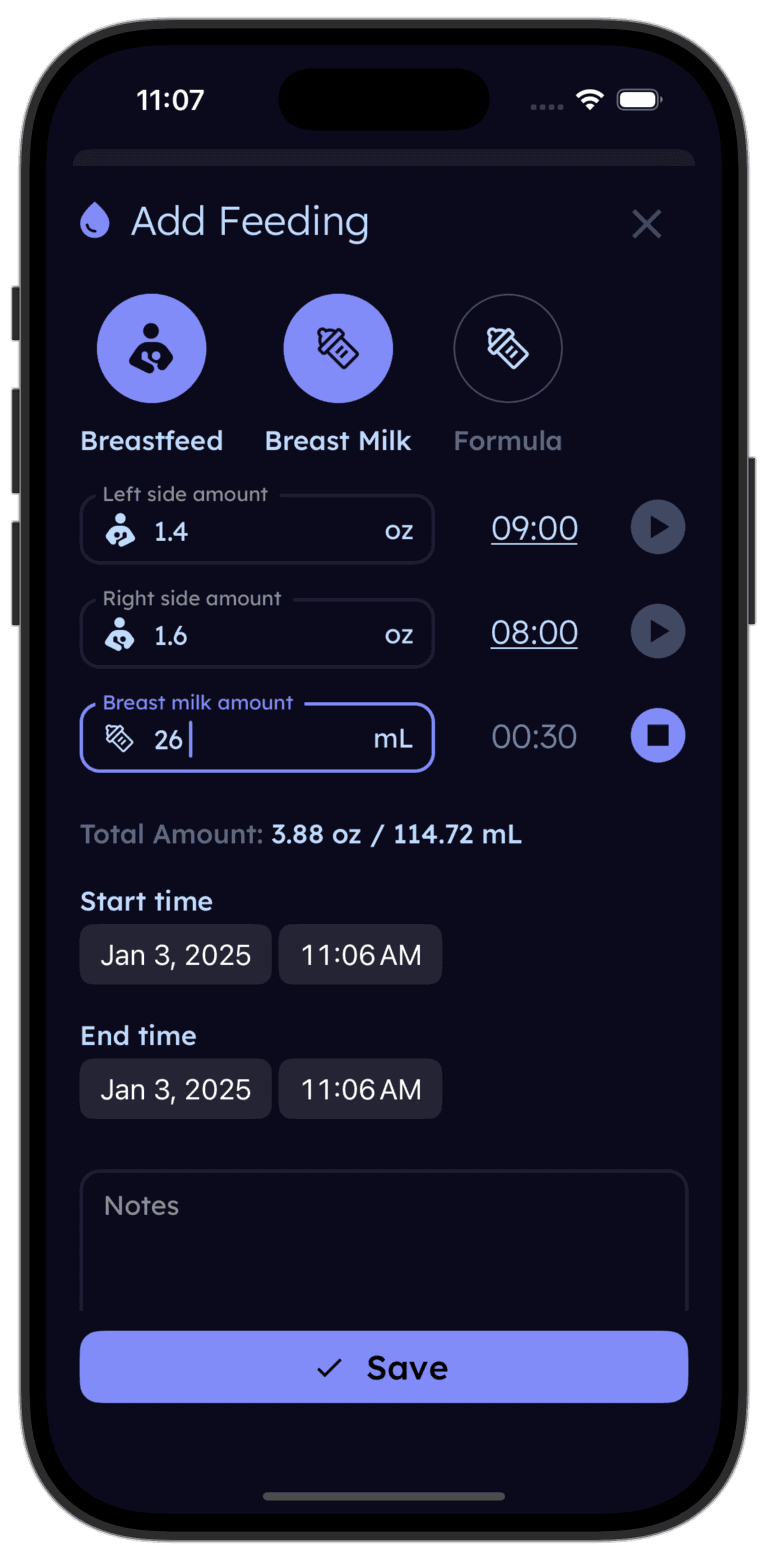
Tinylog app showing feeding log for tracking the transition to solid foods

Logging milestones and feeding readiness helps you time the transition with confidence.

Tinylog tracks developmental milestones like head control, sitting, and interest in food — alongside your feeding log. When it's time to start solids, you'll have a clear timeline of how baby got there.

Download on the App StoreGet It On Google Play

What the Iron Question Really Looks Like

Full-term babies are born with iron stores that last roughly 4-6 months. After that, dietary iron becomes increasingly important. This is one of the practical arguments for introducing iron-fortified cereal around 4-5 months — it's an easy, reliable way to supplement declining stores.

However, breast milk iron, while present in small quantities, is highly bioavailable (about 50% absorption vs. 12% for iron-fortified cereal). Formula is already iron-fortified. For most full-term, healthy-weight breastfed babies, iron stores remain adequate through 6 months. The babies at highest risk for early iron depletion are those born preterm, small for gestational age, or to mothers with iron deficiency during pregnancy.

If your pediatrician checks your baby's iron levels and finds them declining, introducing iron-rich foods slightly before 6 months makes clinical sense. Our baby first foods guide covers the best iron-rich options to start with. But this is a medical decision based on lab values and individual assessment, not a blanket recommendation.

How to Make This Decision

If your baby was born full-term, has no allergy risk factors, and is growing well on breast milk or formula: Waiting until closer to 6 months, when readiness signs are clear, aligns with the strongest evidence and broadest expert consensus. Once you are ready, you will also want to decide between baby-led weaning and spoon feeding as your approach.

If your baby has a family history of food allergies (especially peanut or egg allergy): Discuss early allergen introduction with your pediatrician. The LEAP and EAT study evidence is strongest for high-risk infants, and introduction between 4-6 months may be beneficial.

If your baby was born preterm or has declining iron stores: Your pediatrician may recommend iron supplementation or early introduction of iron-rich foods before 6 months based on individual assessment.

If your baby is 5 months old and showing all four readiness signs: Many pediatricians would support starting, even though it's before the 6-month mark. Readiness is a spectrum, not a light switch.


Tips That Apply Either Way

Focus on readiness signs, not the calendar

No baby reads the guidelines. Whether you're aiming for 4 months, 5 months, or 6 months, the readiness signs matter more than the date. All four signs should be present: sitting with minimal support, good head control, loss of tongue-thrust reflex, and interest in food. If your baby is 6 months old but not sitting well, waiting a few more weeks is appropriate.

Early solids don't replace milk feeds

Whether starting at 4 months or 6 months, breast milk or formula remains the primary source of nutrition for the entire first year. Solids are complementary — they add to, not replace, milk feeds. Offer solids after nursing or a bottle, not instead of. Volume of solid food intake is less important than exposure in the early weeks.

Talk to your pediatrician about your specific baby

Guidelines are population-level recommendations. Your pediatrician considers your individual baby's growth trajectory, iron status, developmental milestones, family allergy history, and prematurity status. A baby born at 34 weeks has a different timeline than a full-term baby. Trust your provider's individualized advice over internet debates.

Related Guides

Sources

  • Du Toit, G., et al. (2015). Randomized Trial of Peanut Consumption in Infants at Risk for Peanut Allergy (LEAP study). New England Journal of Medicine, 372(9), 803-813.
  • Perkin, M. R., et al. (2016). Randomized Trial of Introduction of Allergenic Foods in Breast-Fed Infants (EAT study). New England Journal of Medicine, 374(18), 1733-1743.
  • WHO. (2003). Global strategy for infant and young child feeding. World Health Organization.
  • Fewtrell, M., et al. (2017). Complementary Feeding: A Position Paper by the ESPGHAN Committee on Nutrition. Journal of Pediatric Gastroenterology and Nutrition, 64(1), 119-132.
  • Perkin, M. R., et al. (2018). Association of Early Introduction of Solids With Infant Sleep. JAMA Pediatrics, 172(8), e180739.

This guide is for informational purposes only and is not a substitute for professional medical advice. Consult your pediatrician for guidance specific to your baby.

Get this comparison in your inbox.
Save this research summary to reference when you're making the decision for your baby.
Tracking readiness signs helps you time solids introduction with confidence.
Download Tinylog — log milestones, feeding sessions, and the transition to solids.
Download on the App StoreGet It On Google Play