GUIDE

Baby-Led Weaning vs. Spoon Feeding

Baby-led weaning lets baby self-feed with finger foods from the start. Spoon feeding is parent-led, starting with purees and progressing textures. Both approaches produce competent eaters — the best method is the one that works for your family.

This isn't about philosophy. It's about what happens at the high chair, what the mess looks like, and what actually matters for your baby's development.

Log first foods and reactions

Track what baby eats and tolerates

There are multiple healthy ways to feed your baby. Feeding methods aren't always one-size-fits-all, and as long as you're being safe, you don't have to do things in a certain way.
Dr. Kimberly ChurbockDr. Kimberly Churbock, MD, Pediatrician, Cleveland Clinic

The Method Matters Less Than You Think

The internet has turned baby feeding into a tribal identity. You're either a BLW parent or you're not, and never the two shall meet. This is not useful for anyone — especially your baby, who doesn't care about feeding philosophies and just wants to eat.

What the research actually says: a 2016 study in BMJ Open (Morison et al.) compared BLW and conventionally-fed babies at 6-8 months and found no significant differences in energy intake or nutritional adequacy. The BLISS trial (Daniels et al., 2015) found no significant differences in growth, iron status, or choking incidents between groups when both received appropriate guidance. The Taylor et al. (2017) JAMA Pediatrics study found no difference in BMI at 12 or 24 months. If you are still deciding when to start solids, sort that out first — the method matters less than the timing and readiness signs.

The practical differences are real but they're about logistics — mess, caregiver comfort, iron delivery — not about creating fundamentally different eaters. Most families end up doing a combination regardless of their stated approach. That's not a compromise; it's common sense.

Baby-Led Weaning vs. Spoon Feeding
How baby eats
Baby-Led Weaning (Self-Feeding)Baby picks up soft finger foods and brings them to their own mouth. Baby controls the pace, amount, and what to eat.
Spoon Feeding (Parent-Led)Parent loads a spoon and brings it to baby's mouth. Parent controls pace and can measure intake more easily.
Starting texture
Baby-Led Weaning (Self-Feeding)Soft solids from day one — steamed vegetables, ripe fruit, tender meat cut into graspable pieces.
Spoon Feeding (Parent-Led)Smooth purees initially, progressing to thicker textures over weeks or months.
Motor skills practiced
Baby-Led Weaning (Self-Feeding)Grasping, hand-eye coordination, pincer grip, biting, chewing, and lateral tongue movement from the start.
Spoon Feeding (Parent-Led)Lip closure around spoon, swallowing smooth textures, then gradually learning to manage lumps.
Mess level
Baby-Led Weaning (Self-Feeding)Very high. Food goes on the floor, in hair, on the dog. Every meal. For months.
Spoon Feeding (Parent-Led)Moderate. Spoon feeding is neater, though face, bib, and high chair still get messy.
Caregiver comfort
Baby-Led Weaning (Self-Feeding)Requires confidence with gagging (normal) vs. choking (emergency). Can be stressful to watch initially.
Spoon Feeding (Parent-Led)More familiar to most caregivers. Daycare, grandparents typically more comfortable with spoon feeding.
Meal prep
Baby-Led Weaning (Self-Feeding)Can share modified family meals. Less separate baby food prep. More focus on safe cuts and sizes.
Spoon Feeding (Parent-Led)Requires blending, mashing, or buying commercial baby food. More prep but straightforward.
Iron delivery
Baby-Led Weaning (Self-Feeding)Relies on baby eating enough iron-rich finger foods (meat strips, beans). Volume eaten may be low initially.
Spoon Feeding (Parent-Led)Iron-fortified cereal via spoon is an easy, reliable iron source from the start.
This comparison assumes both methods are done with appropriate safety precautions, upright seating, and supervision.

Baby-Led Weaning Advantages

  • Baby develops chewing skills, hand-eye coordination, and self-regulation of appetite from the start
  • Exposure to varied textures from day one — no 'texture transition' to navigate later
  • Baby eats to their own hunger and satiety cues, supporting healthy eating patterns
  • Reduces separate meal prep — baby eats modified versions of what the family eats
  • Promotes independence and exploration at mealtimes

These benefits are real, but spoon-fed babies develop these skills too — just on a slightly different timeline.

Baby-Led Weaning Challenges

  • Gagging is frequent and can be very anxiety-inducing for parents (even though it's normal)
  • Hard to track exactly how much baby eats — a lot of food ends up on the floor
  • Iron intake may be lower initially since volume consumed is small at first
  • Requires specific knowledge of safe food shapes, sizes, and preparation methods
  • Not all caregivers (daycare, grandparents) are comfortable with this approach

Preparation and education mitigate most of these challenges.

Spoon Feeding Advantages

  • Easier to ensure adequate iron intake via iron-fortified cereals and meat purees
  • Parent can see and measure how much baby is eating — reassuring for anxious feeders
  • Less messy than self-feeding — practical for on-the-go meals and restaurant eating
  • Most daycare providers and extended family are comfortable with spoon feeding
  • Lower initial gagging — smoother textures don't trigger the gag reflex as strongly

Spoon feeding has worked for generations. It's not inferior — it's different.

Spoon Feeding Challenges

  • If texture progression is delayed past 9 months, baby may resist lumpy and solid foods later
  • Parent-controlled pace can override baby's satiety cues if not careful
  • Smooth purees don't develop chewing skills — baby must learn these later during texture transition
  • Overreliance on pouches can delay oral motor development (sucking is not chewing)
  • Requires blending or purchasing baby food, which adds cost or prep time

The key risk is delaying texture progression. If you advance textures on schedule, these concerns are minimal.

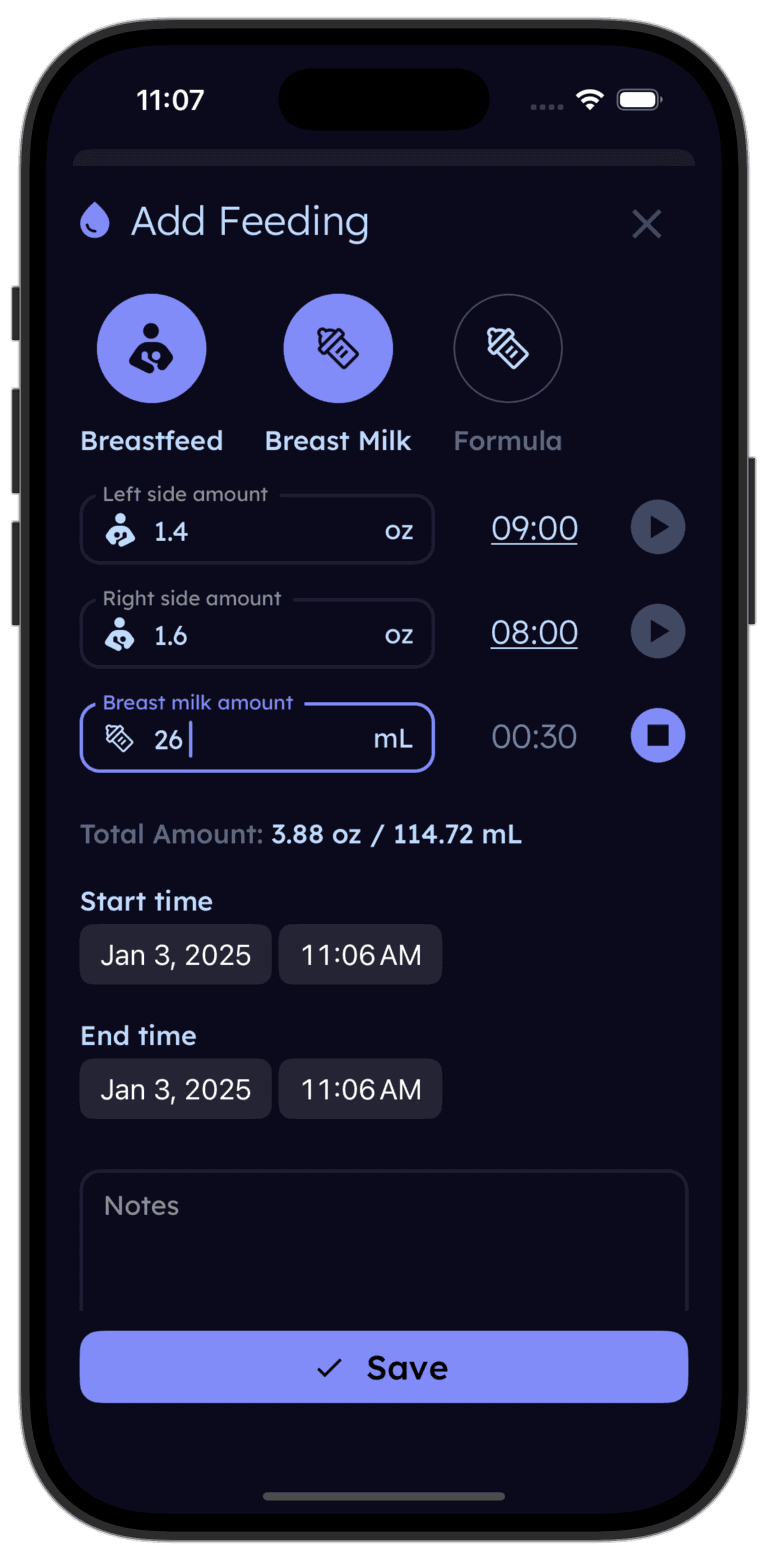
Tinylog app showing a feeding log with meal entries and food types

Tracking first foods helps you spot patterns and remember what's been introduced.

Tinylog logs every meal and new food introduction. When your pediatrician asks what baby's eating or you need to identify a potential allergen trigger, you'll have the data.

Download on the App StoreGet It On Google Play

The Real-World Decision: Factors That Actually Matter

Your anxiety tolerance. Gagging is the number-one reason parents stop BLW. It's loud, dramatic, and terrifying if you don't know it's normal — our BLW choking hazards guide explains how to tell gagging from choking and which foods to avoid. If watching your baby gag would make mealtimes stressful for everyone, starting with purees and gradually introducing finger foods might be a smoother path. Both routes get you to the same destination.

Your childcare situation. If baby is in daycare, ask about their feeding policy. Many childcare centers are more comfortable with purees and may have policies about finger food sizes. Fighting your daycare's approach creates inconsistency that helps nobody.

Your meal prep capacity. BLW can be easier in theory (share family meals) but requires knowledge of safe preparation methods. Spoon feeding requires blending or buying baby food but is more straightforward. Think about what's sustainable for your schedule, not what looks best on social media.

Your baby's personality. Some babies grab food at five and a half months and refuse the spoon entirely. Others happily open wide for a loaded spoon and ignore finger food. Your baby will tell you what they prefer if you pay attention. Whichever method you choose, make sure you have a plan for introducing allergens early and systematically.


Tips That Apply Either Way

Whichever method you start with, progress textures by 9 months

This is the single most important takeaway. Research consistently shows that babies exposed to lumpy textures by 9 months accept a wider variety of foods at later ages. Whether you start with BLW (already textured) or purees (needs progression), make sure your baby is experiencing soft solids by 8-9 months.

Take an infant CPR class before starting either method

Knowing the difference between gagging (noisy, productive, protective) and choking (silent, requires intervention) matters regardless of your approach. Infant CPR training isn't just for BLW parents. Every caregiver who feeds a baby solids should know what to do.

Track new foods for allergy monitoring

Regardless of method, introduce new foods one at a time with 2-3 days between new allergens. Log what you've introduced and any reactions — rashes, vomiting, diarrhea, or swelling. This data is invaluable if an allergic reaction occurs and you need to identify the trigger.

Related Guides

Sources

  • Morison, B. J., et al. (2016). How different are baby-led weaning and conventional complementary feeding? BMJ Open, 6(5), e010665.
  • Daniels, L., et al. (2015). Baby-Led Introduction to SolidS (BLISS) study. BMC Pediatrics, 15, 179.
  • Taylor, R. W., et al. (2017). Effect of a Baby-Led Approach to Complementary Feeding on Infant Growth and Overweight. JAMA Pediatrics, 171(9), 838-846.
  • Fangupo, L. J., et al. (2016). A Baby-Led Approach to Eating Solids and Risk of Choking. Pediatrics, 138(4), e20160772.
  • Rapley, G., & Murkett, T. (2010). Baby-Led Weaning: The Essential Guide to Introducing Solid Foods. The Experiment.

This guide is for informational purposes only and is not a substitute for professional medical advice. Consult your pediatrician for guidance specific to your baby.

Get this comparison in your inbox.
Share this breakdown with your partner or caregiver so you're on the same page about feeding.
First foods are worth remembering — and tracking reactions matters.
Download Tinylog — log meals, new foods introduced, and any reactions in one place.
Download on the App StoreGet It On Google Play