A lot of parents assume all growth charts are basically the same. They are not. The WHO and CDC growth charts were built from different populations, with different methodologies, and they answer fundamentally different questions.
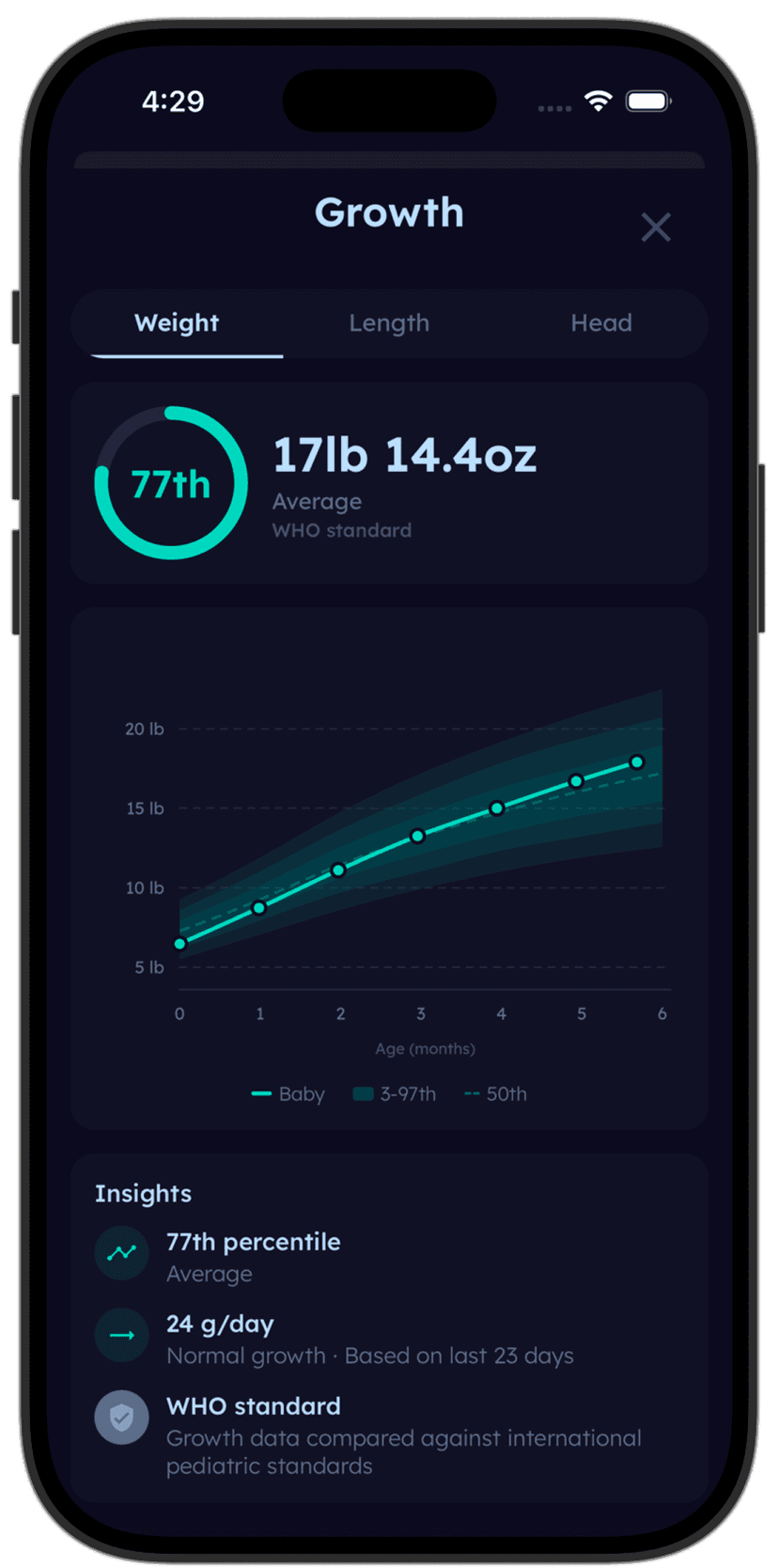
The WHO growth standards (released 2006) were created from a carefully selected group of healthy, breastfed babies from six countries. These babies were raised in optimal conditions — adequate nutrition, non-smoking mothers, and breastfeeding for at least 12 months. The resulting charts show how babies should grow when everything is going right. They are a prescriptive standard.
The CDC growth charts (updated 2000) were created from US national health survey data collected between 1963 and 1994. This population included both breastfed and formula-fed babies, with a heavy skew toward formula-fed infants (reflecting feeding practices of that era). The charts show how American babies did grow. They are a descriptive reference.
This distinction matters because a descriptive reference includes unhealthy growth patterns in its "normal" range. The CDC charts were built from a population where obesity rates were already rising and breastfeeding rates were low. Using them as the standard for infant growth means comparing your baby against a population that may not represent optimal health. This is especially important if you're tracking breastfed vs. formula-fed growth differences, since the CDC population skewed heavily toward formula feeding.