GUIDE

16 Month Old Sleep Schedule

One solid nap, predictable bedtime, and a toddler with very strong opinions about all of it.

The schedule is working. The challenge now isn't the timing — it's the toddler personality bringing new energy to bedtime. Here's how to keep the rhythm strong.

Sixteen Months: The Schedule Works — Now for the Personality

Sixteen months is squarely in toddler territory, and your child's sleep should reflect that — one solid midday nap, a predictable bedtime, and consistent nighttime sleep. The nap transition is behind you (or very nearly), and what you have now is a schedule that actually works for the whole family.

The challenge at this age isn't the schedule itself — it's the toddler personality emerging at full force. Your child has opinions about everything, including bedtime. They want one more book. They need water. They want the other pajamas. They want YOU to stay. This is all developmentally normal and a sign of healthy cognitive growth — and it requires a new skill from you: warm firmness.

The key at 16 months is to maintain the schedule you've built while adapting your approach to your toddler's growing need for autonomy. Structured choices, predictable routines, and consistent boundaries are your tools. When the routine is the same every night, your toddler knows what to expect — and predictability reduces anxiety and resistance.


16 Month Old Sleep at a Glance
Total sleep (24 hrs)
12–14 hours
Nighttime sleep
10–12 hours
Number of naps
1
Nap duration
2–3 hours
Wake windows
4.5–5.5 hours
These ranges are consistent with 15 months — the schedule is stable now.

Sample 16 Month Old Schedule

A realistic daily routine. Adjust based on your toddler's wake time.

Sample daily schedule

  1. Wake + milk
  2. Breakfast
  3. Snack
  4. Lunch
  5. Nap (2–2.5 hrs)
  6. Wake + milk + snack
  7. Dinner
  8. Bedtime routine + milk
  9. Bedtime

The wake windows matter more than the clock times. At 16 months, the schedule should feel routine. If it doesn't, check that wake windows match the 4.5 to 5.5 hour range.

Wake Windows at 16 Months

Wake windows are 4.5 to 5.5 hours. Morning: about 5 to 5.5 hours before the nap. Afternoon: about 4.5 to 5 hours after. These are slightly longer than 15 months as your toddler's sleep needs gradually decrease. If bedtime is consistently easy and your toddler falls asleep quickly, the windows are right. If there's resistance, adjust by 15 minutes in either direction.

Naps at 16 Months

One nap, 2 to 3 hours. Solidly established. The nap should start between 12:00 and 1:00 PM. If it consistently runs past 3 hours and bedtime suffers, cap it by waking your toddler. If it's consistently short (under 1.5 hours), extend the morning wake window. Occasional nap skips on exciting days are normal — compensate with earlier bedtime.

Nighttime Sleep at 16 Months

Nighttime sleep is 10 to 12 hours. Typically very consistent. Bedtime routines are more important than ever as your toddler's language and understanding grow. The routine isn't just a sleep cue anymore — it's a ritual your toddler anticipates, participates in, and finds comfort in. Keep it predictable: same activities, same order, same endpoint every night.

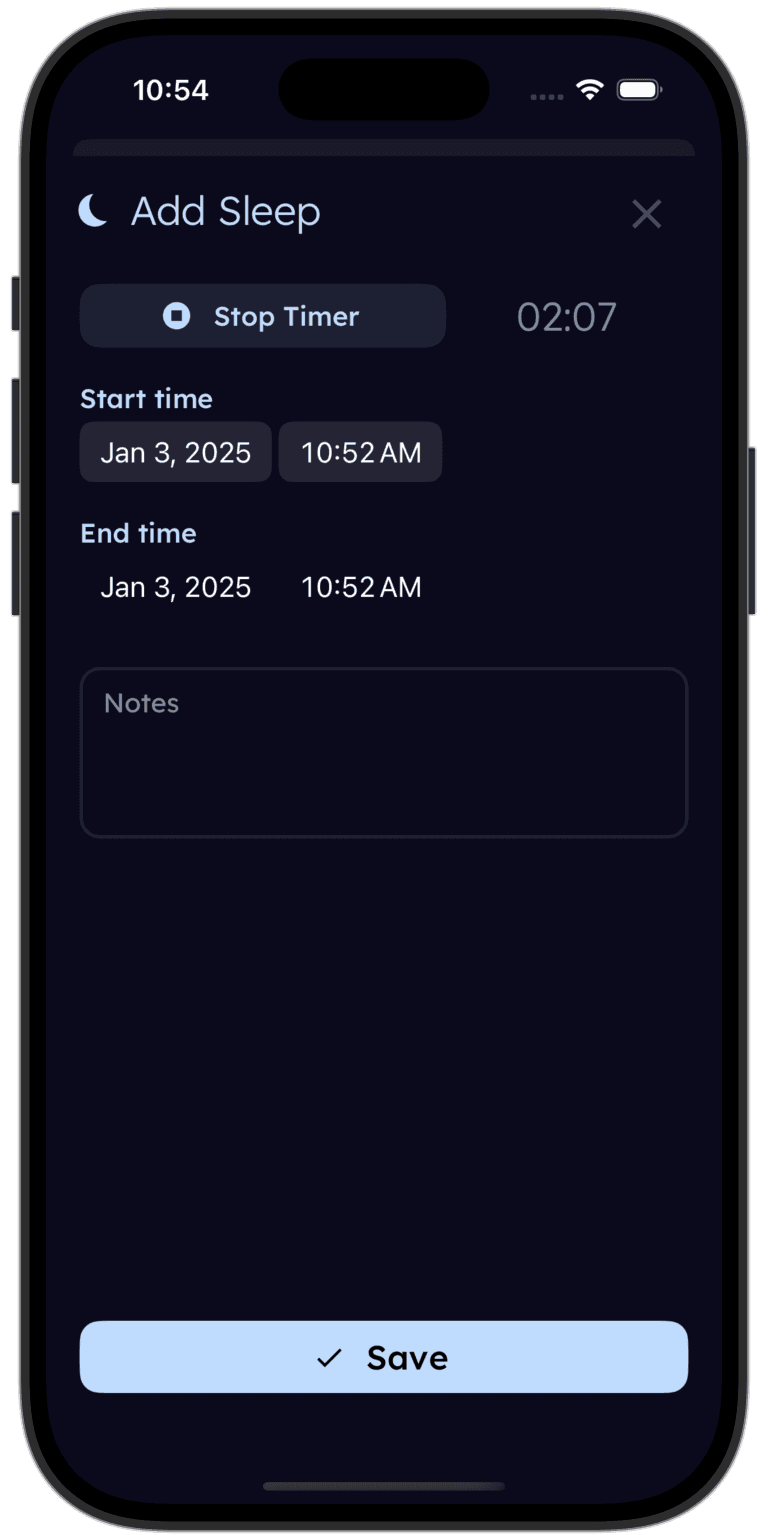
tinylog showing stable 16 month old one-nap routine

The one-nap routine is humming — keep it visible.

Tracking at 16 months creates a clear picture of your toddler's rhythm. When disruptions come (illness, travel, regressions), you'll know exactly what 'normal' looks like and can return to it quickly.

Download on the App StoreGet It On Google Play

What's Happening Developmentally

At 16 months, your toddler is running (or trying), climbing stairs with help, building towers, and expanding their vocabulary to 10 to 50 words. They follow multi-step instructions, engage in pretend play, and show a growing understanding of their own desires. Independence and autonomy drive their behavior — including sleep behavior. They're testing boundaries because understanding boundaries is how they learn the rules of their world. Bedtime boundary-testing is normal and healthy. Your consistent response teaches them that some things (like bedtime) are predictable and reliable, which ultimately creates security.

Common Problems at 16 Months

Bedtime stalling — the toddler classic

More water, more books, one more hug, potty (even if they're not potty training). Your 16-month-old is discovering that certain requests delay bedtime. The solution: build everything into the routine proactively. Last drink before teeth. Two books. One song. One hug and kiss. Goodnight. Same sequence every night. When there's nothing left to ask for, the stalling loses its power.

Crib escape attempts

Some 16-month-olds start trying to climb out of the crib. This is a safety issue. First: lower the mattress as far as possible. Second: try a backward sleep sack to limit leg movement. Third: remove any objects near the crib that provide a foothold. If none of these work, you may need to consider a toddler bed — but delay this as long as safely possible, as the crib's physical containment supports sleep.

Nap refusal on exciting days

A trip to the park, a playdate, grandparent visit — exciting mornings can make your toddler too stimulated to settle for the nap. This is occasional and normal. If they don't nap after 20 minutes, get them up, keep the afternoon calm, and move bedtime 30 to 45 minutes earlier. One missed nap won't derail things if you compensate.

What No One Tells You About Sleep at 16 Months

Bedtime stalling isn't defiance — it's developmentally normal problem-solving

Your toddler has learned that certain behaviors produce specific responses from you. Asking for water gets you back in the room. Saying 'scared' gets attention. This isn't manipulation — it's sophisticated cause-and-effect understanding. The solution isn't more firmness, it's removing the negotiation opportunities. Build every legitimate need into the routine so there's nothing left to request.

If your toddler is happy, energetic, and falling asleep easily — stop tweaking

If the schedule is working, there's no reason to optimize it. A toddler who is happy during wake windows, settles within 10 to 15 minutes at nap and bedtime, and sleeps through the night has a schedule that fits their needs. Trust your data, not the internet's opinion about what 'should' be happening.

When to Talk to Your Pediatrician

  • Your toddler seems excessively tired despite consistent sleep
  • Crib climbing that can't be managed with safety measures
  • Snoring or breathing difficulties during sleep
  • New onset of night terrors (confused screaming, eyes open but not awake)
  • Regression in speech or motor skills
  • Any concern about development or behavior

You never need a 'good enough' reason to call. 'Something seems off' is always enough.

Related Guides

Sources

American Academy of Pediatrics (AAP). (2022). Healthy Sleep Habits: How Many Hours Does Your Child Need?
Mindell, J. A., et al. (2016). Development of infant and toddler sleep patterns. Journal of Sleep Research, 25(5), 508–516.
Galland, B. C., et al. (2012). Normal sleep patterns in infants and children: A systematic review. Sleep Medicine Reviews, 16(3), 213–222.
Baby Sleep Information Source (BASIS), Durham University. Normal Infant Sleep Development. https://www.basisonline.org.uk
Zero to Three. (2022). Toddler Development. https://www.zerotothree.org

Medical Disclaimer

This guide is for informational purposes only and is not a substitute for professional medical advice. Always follow safe sleep guidelines as appropriate for your child's age. Consult your pediatrician with any concerns about your child's sleep.

Want this guide in your inbox?
We'll send you this toddler sleep guide for easy reference.
Toddler sleep, tracked simply.
Download ${appName} free — keep the one-nap rhythm visible.
Download on the App StoreGet It On Google Play