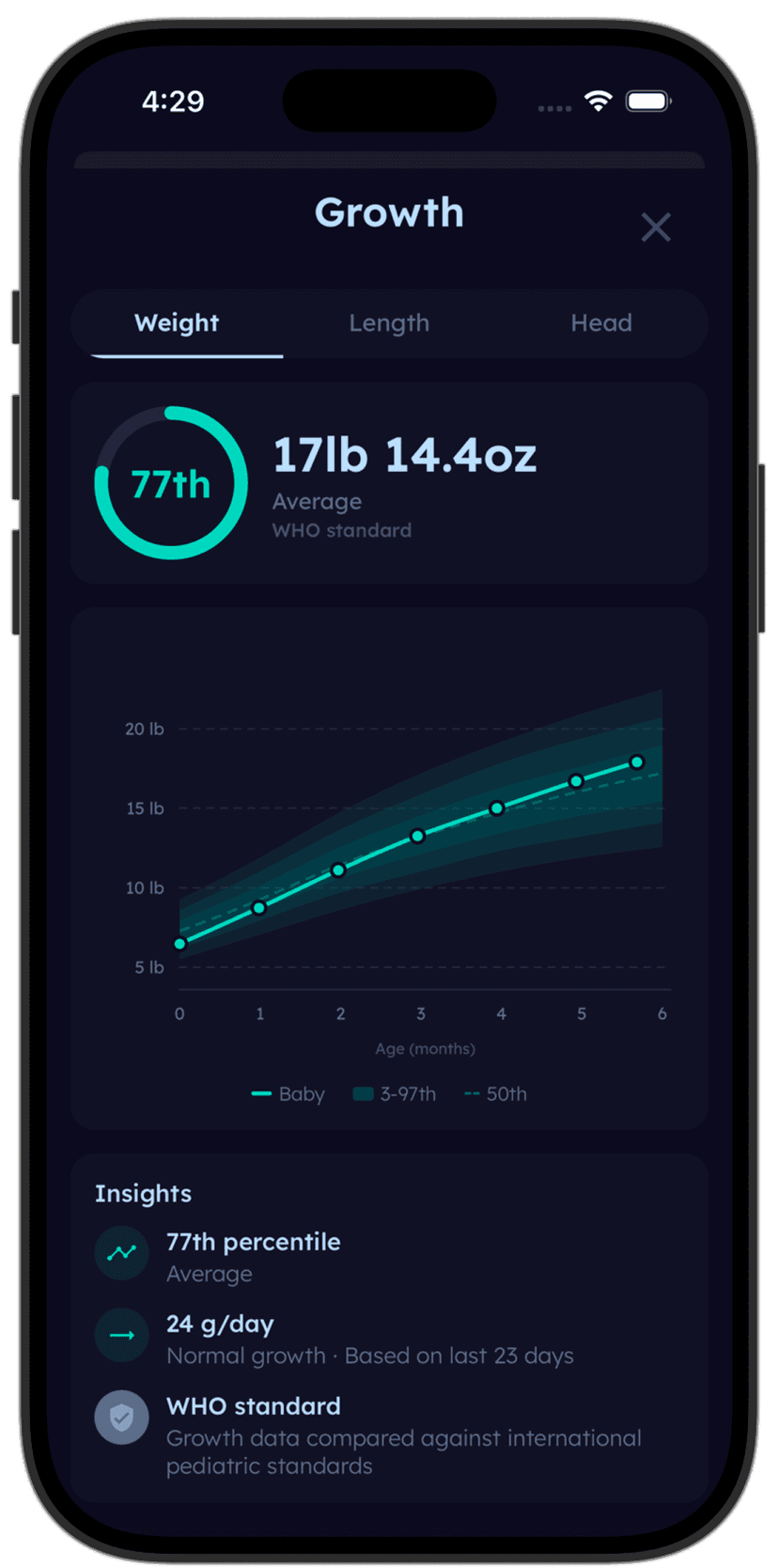
When your pediatrician plots your baby's growth, they're not fixating on the percentile number. They're looking at the shape of the curve. Here's what matters to them:
Growth velocity — is your baby gaining weight at a steady rate, even if it's slow? Steady gain along the 5th percentile is healthy. Flattening or declining weight gain is what gets their attention.
Proportionality — are weight, length, and head circumference roughly tracking together? It's okay if they're at different percentiles, but a significant gap between weight and length can be informative.
The big picture — your baby's feeding patterns, energy level, developmental milestones, and family genetics all factor into how your pediatrician interprets the growth chart. The number is just one piece of a much larger puzzle.
If your pediatrician isn't concerned, take that as genuine reassurance. They've seen thousands of growth charts, and they know what a healthy small baby looks like. For a deeper dive into how percentiles work across the entire range, check out our
complete growth percentiles guide.