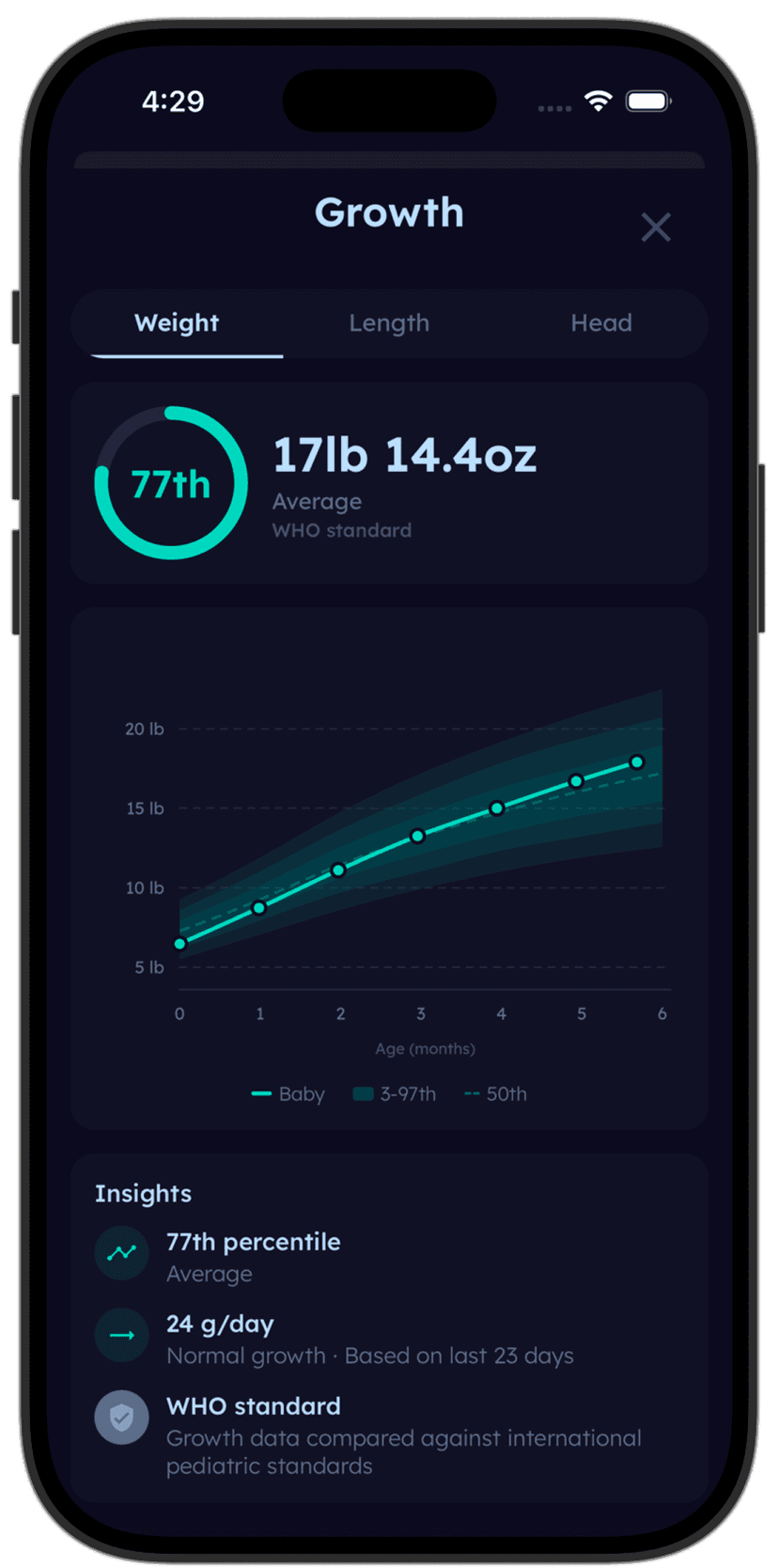
If your pediatrician is concerned about your baby's growth pattern, here's what typically happens:
They'll want to review the full growth history — not just the last visit, but the trajectory from birth. Bring any home measurements if you have them.
They'll ask about feeding in detail — how often, how much, breastfed or formula, how feeds are going, any difficulties or changes. They may observe a feeding session.
They may order basic lab work — blood counts, metabolic panels, thyroid function — to screen for underlying conditions.
They may refer to a lactation consultant (for breastfeeding issues), a pediatric gastroenterologist (for absorption issues), or a feeding therapist (for oral motor or behavioral feeding issues).
The most common intervention is increasing caloric intake — through feeding support, supplementation, or calorie-dense additions to feeds. Most babies respond well when the underlying cause is addressed.
For more on what growth percentiles mean and how to interpret them, see our
growth percentiles guide. For more on whether your baby is eating enough, see our
guide on adequate intake signs.