GUIDE

Crib in Parents' Room vs. Nursery From Birth

The AAP recommends room-sharing for at least the first 6 months to reduce SIDS risk. However, research also shows that babies who move to their own room by 4-6 months may sleep longer. Both options are safe when safe sleep guidelines are followed.

This is one of the most debated decisions new parents face — and the answer depends on your family's priorities and sleep tolerance.

Track sleep from day one

Log sleep patterns wherever baby sleeps

Many pediatricians and sleep experts question the room-sharing recommendation until one year because infants begin to experience separation anxiety in the second half of the first year, making it problematic to change sleep locations at that stage.
Dr. Ian PaulDr. Ian Paul, MD, MSc, Professor of Pediatrics, Penn State College of Medicine

The Recommendation vs. The Research

The AAP's recommendation is clear: room-share for at least 6 months, ideally 12 months, to reduce the risk of SIDS. This recommendation is based on several studies showing that room-sharing (without bed-sharing) is associated with a lower SIDS risk. The proximity allows parents to monitor baby's state and respond quickly.

But a 2017 study by Paul et al. published in Pediatrics complicated the picture. Researchers found that babies who slept in their own room by 4 months slept 40 minutes longer at night than room-sharing babies. By 9 months, the independent sleepers were getting 40 more minutes of consolidated nighttime sleep and were less likely to have developed unsustainable sleep associations.

This created a tension that the pediatric community hasn't fully resolved. The AAP's recommendation prioritizes SIDS risk reduction. The Paul study highlights that room-sharing has sleep costs for both baby and parents — our guide on whether your baby's sleep is normal can help you evaluate what to expect. Most pediatricians now acknowledge this as a nuanced decision rather than a one-size-fits-all mandate.

Room-Sharing vs. Separate Nursery
SIDS risk reduction
Crib in Parents' RoomAAP cites up to 50% reduced risk with room-sharing
Nursery From BirthNo room-sharing protective effect, but safe sleep surface practices still apply
Baby sleep duration
Crib in Parents' RoomBabies may sleep shorter stretches due to parent noise
Nursery From BirthBabies in their own room by 4-9 months sleep ~40 min longer at night
Parent sleep quality
Crib in Parents' RoomParents sleep less — every grunt and squirm wakes them
Nursery From BirthParents typically sleep better without baby's sleep sounds
Nighttime feeding ease
Crib in Parents' RoomBaby is right there — feeds are quick and convenient
Nursery From BirthRequires walking to another room — more disruptive but may promote longer stretches
AAP recommendation
Crib in Parents' RoomRecommended for at least 6 months, ideally 12
Nursery From BirthNot in line with current AAP guidelines
Monitoring
Crib in Parents' RoomDirect visual and auditory monitoring — no technology needed
Nursery From BirthRelies on baby monitor for awareness
The AAP recommends room-sharing for at least 6 months. Individual families may weigh the evidence differently.

Room-Sharing Advantages

  • Follows AAP recommendation — associated with reduced SIDS risk
  • Nighttime feeds and comfort are immediately accessible
  • No monitor needed — you can hear and check on baby directly
  • Many parents find the proximity emotionally reassuring
  • Easier for breastfeeding mothers — minimal disruption to feed

Room-sharing is the AAP-recommended approach for the first 6-12 months.

Room-Sharing Challenges

  • Parents sleep less — baby noises trigger constant waking
  • Baby may wake more from parent sounds and movements
  • Can delay development of independent sleep skills
  • Higher risk of reactive night feeding — responding to sounds that aren't hunger

The sleep quality impact on parents is the most commonly cited concern.

Separate Nursery Advantages

  • Parents sleep better — a major factor in daytime functioning and safety
  • Babies in their own room tend to sleep longer stretches
  • Encourages development of independent sleep skills earlier
  • Dedicated sleep environment is easier to optimize (darkness, temperature, noise)

Better sleep for both baby and parents is the primary benefit documented in research.

Separate Nursery Challenges

  • Goes against current AAP room-sharing recommendation
  • Nighttime feeds require more effort — walking to another room
  • Parents may feel anxious without baby nearby
  • Relies on monitor technology for awareness of baby's state

Discuss early nursery transition with your pediatrician before making this decision.

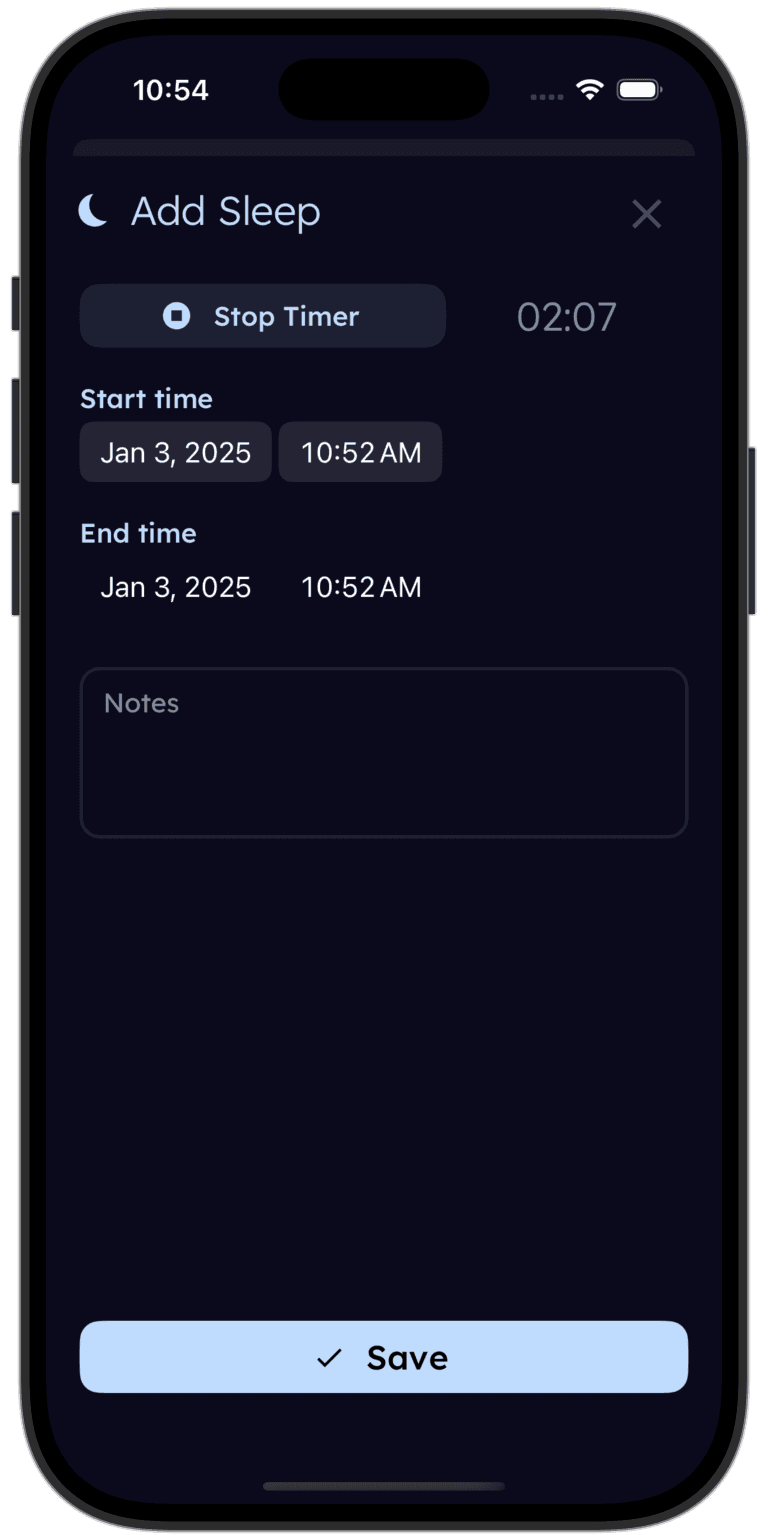
Tinylog sleep tracker logging nighttime sleep patterns

Track sleep wherever baby sleeps.

Whether baby is in your room or the nursery, Tinylog helps you log sleep times and spot patterns. If you're considering a transition, track sleep before and after to see the actual impact.

Download on the App StoreGet It On Google Play

Making the Decision for Your Family

This is genuinely a decision where reasonable parents and reasonable pediatricians can land in different places. Here are the factors worth weighing:

If SIDS risk reduction is your top priority, room-share for at least 6 months. The AAP recommendation exists for a reason, and the association between room-sharing and reduced SIDS risk is documented in multiple studies. Combine this with a firm, flat sleep surface, no loose bedding, and back sleeping for maximum protection.

If parent sleep deprivation is becoming dangerous, the nursery may be the safer overall choice. A parent who falls asleep holding their baby on the couch because they're too exhausted from room-sharing is in a more dangerous situation than a baby sleeping alone in a safe crib in the next room. This is not hypothetical — accidental co-sleeping on couches and recliners is a significant SIDS risk factor.

If you're somewhere in between, the 4-6 month window is a common compromise. Room-share through the highest-risk SIDS period (0-4 months) and then transition to the nursery when baby's sleep architecture matures and the SIDS risk naturally decreases. If you're also considering sleep training, the nursery transition often pairs well with that process.


Tips That Apply Either Way

Safe sleep surface matters most

Whether baby sleeps in your room or the nursery, the sleep surface is the most important safety factor. Firm, flat mattress. No loose bedding, pillows, bumpers, or stuffed animals. Always on their back. This applies regardless of room location.

If you room-share, set a transition plan

Decide in advance roughly when you'll move baby to the nursery. Having a plan prevents the drift into room-sharing out of habit long after it's stopped serving either parent or baby well.

Parent sleep is a safety issue too

Severely sleep-deprived parents are more likely to make dangerous mistakes — falling asleep while feeding in unsafe positions, driving impaired, or making poor judgment calls. If room-sharing is destroying your ability to function, that's a legitimate safety concern worth discussing with your pediatrician.

Related Guides

Sources

  • American Academy of Pediatrics. (2022). "Sleep-Related Infant Deaths: Updated 2022 Recommendations." Pediatrics, 150(1).
  • Paul, I. M., et al. (2017). "Mother-Infant Room-Sharing and Sleep Outcomes in the INSIGHT Study." Pediatrics, 140(1).
  • Blair, P. S., et al. (2010). "Hazardous cosleeping environments and risk factors amenable to change." BMJ, 339.
  • Task Force on Sudden Infant Death Syndrome. (2016). "SIDS and Other Sleep-Related Infant Deaths." Pediatrics, 138(5).

This guide is for informational purposes only and is not a substitute for professional medical advice. Consult your pediatrician for guidance specific to your baby.

Get this comparison in your inbox.
We'll send you this guide so you can make this decision with confidence.
Track sleep regardless of where baby sleeps.
Download Tinylog — log night sleep and see how location changes affect your baby's patterns.
Download on the App StoreGet It On Google Play