GUIDE

Pacifier for Sleep vs. No Pacifier

The AAP recommends offering a pacifier at sleep time because it's associated with a reduced SIDS risk. But pacifiers can also create sleep dependencies that lead to frequent night wakings when the pacifier falls out. Both approaches are valid.

The pacifier decision is one where the SIDS benefit and the sleep quality trade-off genuinely pull in different directions.

Track sleep duration differences

Log sleep with and without the pacifier

Numerous studies have shown that pacifiers reduce the risk of sudden infant death syndrome (SIDS), especially during the first six months of life.
Dr. W. Kyle MuddDr. W. Kyle Mudd, DO, Pediatrician, Cleveland Clinic

The SIDS Factor Changes the Math

Most sleep-related parenting decisions are about preference and convenience. This one is different because of the SIDS data.

A meta-analysis by Hauck et al. (2005) published in Pediatrics found that pacifier use during sleep was associated with a 50-90% reduced risk of SIDS. The AAP incorporated this finding into their safe sleep recommendations, stating that parents should consider offering a pacifier at nap time and bedtime throughout the first year of life.

The mechanism isn't fully understood. Leading theories include increased arousability (babies with pacifiers may wake more easily from dangerous sleep states), improved airway maintenance (the pacifier may help keep the tongue forward), and the handle creating a small air space near the nose and mouth even when pressed against bedding.

This SIDS benefit is the primary reason many pediatricians recommend pacifier use at sleep time even when they acknowledge the sleep quality trade-offs. The risk of SIDS — while rare — has severe consequences. The risk of fragmented sleep from pacifier dependency is annoying but not dangerous. If you're weighing this against where your baby sleeps, the pacifier adds another layer of protection regardless of room arrangement.

Pacifier for Sleep vs. No Pacifier
SIDS risk
Pacifier at SleepAssociated with 50-90% reduced SIDS risk
No PacifierNo pacifier-related SIDS protection
Sleep onset
Pacifier at SleepBabies often fall asleep faster with sucking comfort
No PacifierBaby learns to self-soothe without external aid
Night wakings
Pacifier at SleepMay increase wakings when pacifier falls out (the 're-plug' cycle)
No PacifierFewer pacifier-related wakings — baby doesn't need it replaced
Self-soothing development
Pacifier at SleepCan delay development of independent self-soothing
No PacifierBaby develops other self-soothing strategies earlier
Weaning
Pacifier at SleepRequires eventual weaning — can be challenging around 6-12 months
No PacifierNo weaning process needed
Breastfeeding
Pacifier at SleepMinimal impact if introduced after breastfeeding is established (3-4 weeks)
No PacifierNo concern about nipple preference
SIDS risk reduction data from Hauck et al. (2005) and AAP recommendations (2022).

Pacifier Advantages

  • Significant SIDS risk reduction — this is the strongest argument in favor
  • Provides immediate soothing for babies who need to suck
  • Can help babies fall asleep faster at bedtime and for naps
  • Satisfies the non-nutritive sucking reflex that most babies have
  • AAP explicitly recommends offering a pacifier at sleep time

The SIDS benefit is the strongest evidence-based argument for pacifier use during sleep.

Pacifier Challenges

  • The 're-plug' cycle — baby wakes every time it falls out before they can replace it themselves
  • Can create a strong sleep association that's hard to break
  • Multiple night wakings specifically to replace the pacifier (common at 4-8 months)
  • Eventual weaning required — and it can disrupt sleep all over again

The 're-plug' problem typically peaks at 4-8 months and resolves as baby gains fine motor skills.

No Pacifier Advantages

  • Baby develops self-soothing skills without relying on an external object
  • No middle-of-the-night pacifier hunts or replacements
  • No weaning process to deal with later
  • No concern about dental effects or breastfeeding interference

Going pacifier-free avoids dependency issues but forgoes the SIDS protection.

No Pacifier Challenges

  • Misses the documented SIDS risk reduction benefit
  • Some babies struggle to self-soothe without the sucking reflex
  • May take longer for baby to fall asleep initially
  • Baby may find other self-soothing habits (thumb sucking) that are harder to wean

Some babies self-soothe naturally; others struggle significantly without the pacifier option.

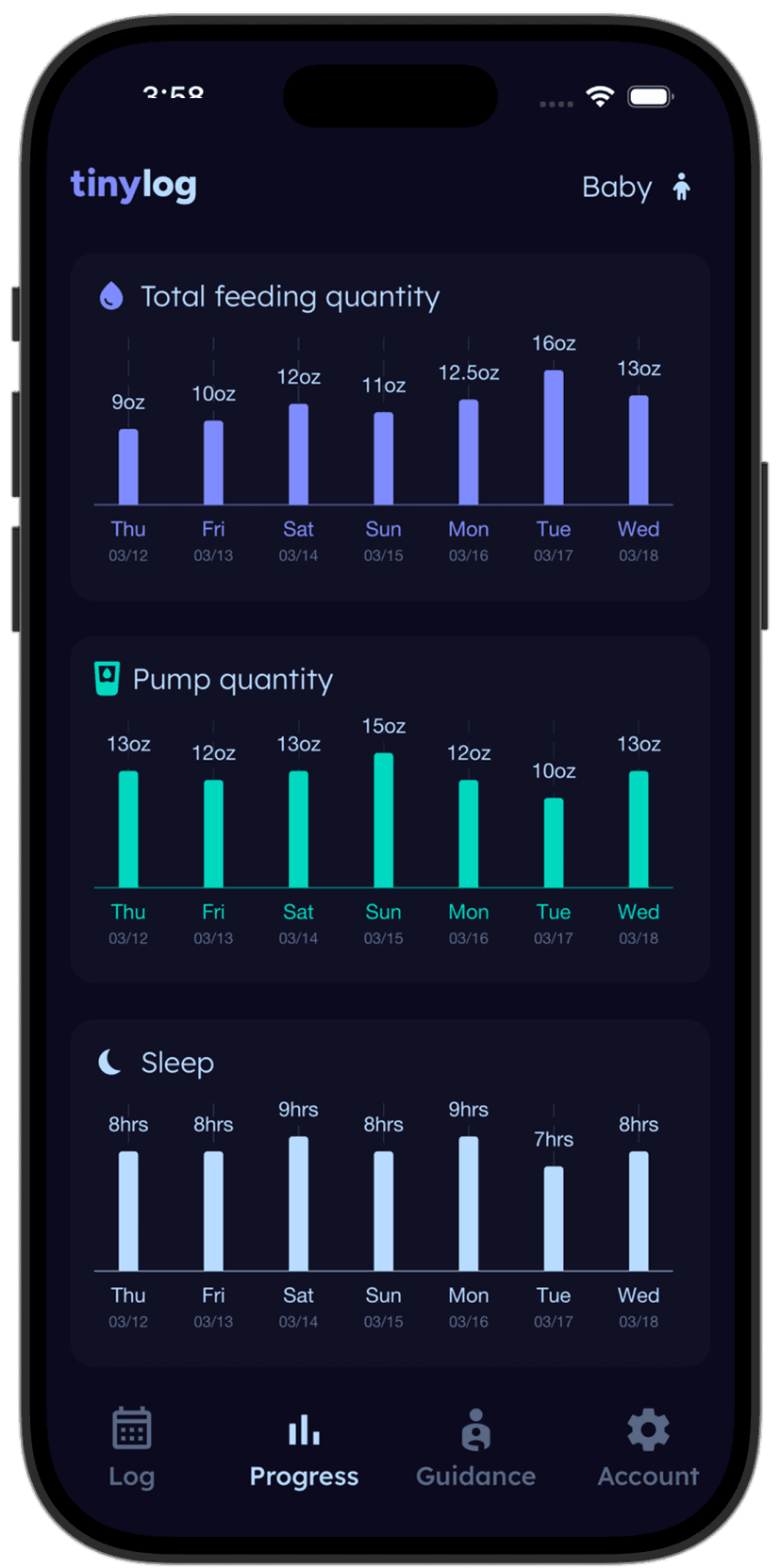
Tinylog sleep trends showing nightly duration and wake-up patterns

See how the pacifier affects your baby's sleep.

Track sleep duration and night wakings in Tinylog. If you're considering dropping the pacifier, compare a few nights with and without to see the actual impact on your baby's sleep patterns.

Download on the App StoreGet It On Google Play

The Practical Reality of the Re-Plug Cycle

Here is the scenario every pacifier parent knows: baby falls asleep with the pacifier at 7 PM. At 10 PM, the pacifier falls out. Baby wakes up, can't find it, and cries. You go in, replace it, baby falls back asleep. At 12:30 AM, it happens again. And at 2 AM. And at 4 AM.

This is the pacifier dependency cycle, and it's most intense between 4-8 months — a period that often overlaps with sleep regressions. Before 4 months, many babies can fall back asleep even after losing the pacifier. After 8 months, most babies develop the fine motor skills to find and replace the pacifier themselves. But that 4-8 month window can be brutal.

Two strategies help: scatter 3-5 pacifiers around the crib so baby is more likely to find one by chance, and actively practice placing the pacifier during awake time so baby learns the hand-to-mouth motion. By 8-9 months, most babies figure this out on their own.


How to Decide

If your baby is under 6 months, the AAP's recommendation to offer a pacifier at sleep time is worth following. The SIDS risk is highest in this period, and the protective benefit is meaningful. If the pacifier causes a few extra wake-ups, the safety trade-off favors keeping it.

After 6 months, the equation shifts. SIDS risk drops significantly, and if the pacifier is causing multiple nightly wake-ups, you have more room to weigh sleep quality against continued protection. Understanding your baby's wake windows can help you distinguish between pacifier-related wakings and normal sleep transitions. Many families find that 6-8 months is a natural time to assess whether the pacifier is still serving their baby or creating more problems than it solves.

Tips That Apply Either Way

The 're-plug' phase is temporary

The worst of the pacifier wake-ups happens between 4-8 months. By 7-8 months, most babies can learn to find and replace the pacifier themselves. Scatter a few pacifiers in the crib so they can grab one without your help.

Don't force it

The AAP says to offer the pacifier, not force it. If your baby spits it out, that's fine. Don't reinsert it repeatedly. Some babies simply don't want one, and that's a perfectly acceptable outcome.

If breastfeeding, wait 3-4 weeks

Give breastfeeding time to establish before introducing a pacifier. By 3-4 weeks, most breastfed babies have no trouble going between breast and pacifier. If your baby is bottle-fed, you can offer one from the start.

Related Guides

Sources

  • Hauck, F. R., Omojokun, O. O., & Siadaty, M. S. (2005). "Do pacifiers reduce the risk of sudden infant death syndrome? A meta-analysis." Pediatrics, 116(5), e716-e723.
  • American Academy of Pediatrics. (2022). "Sleep-Related Infant Deaths: Updated 2022 Recommendations." Pediatrics, 150(1).
  • Jaafar, S. H., et al. (2016). "Effect of restricted pacifier use in breastfeeding term infants for increasing duration of breastfeeding." Cochrane Database of Systematic Reviews.
  • Moon, R. Y., & Task Force on SIDS. (2016). "SIDS and Other Sleep-Related Infant Deaths." Pediatrics, 138(5).

This guide is for informational purposes only and is not a substitute for professional medical advice. Consult your pediatrician for guidance specific to your baby.

Get this comparison in your inbox.
We'll send you this research breakdown to help you decide about pacifier use at sleep time.
Is the pacifier helping or hurting sleep?
Download Tinylog — track sleep duration and night wakings to see the actual pattern.
Download on the App StoreGet It On Google Play