GUIDE

Power Pumping vs. Regular Pumping

Regular pumping maintains your baseline supply through consistent stimulation. Power pumping is a targeted strategy that mimics cluster feeding to signal your body to increase production. They serve different purposes.

Power pumping isn't a replacement for regular pumping — it's a temporary addition. Here's how to use each effectively.

Track every pump session

Log output volume and session type over time

Breastfeeding is a matter of supply and demand. The more milk you remove from your breasts by nursing or pumping, the more it will trigger your body to make milk. That's the best method of establishing and maintaining a healthy supply.
Dr. Kam LamDr. Kam Lam, MD, Breastfeeding Medicine Physician, Cleveland Clinic

Two Tools for Two Different Jobs

Regular pumping and power pumping aren't competing strategies — they serve entirely different purposes. Understanding the distinction helps you use each one correctly and set realistic expectations for what they can accomplish.

Regular pumping is your baseline. It's the consistent, evenly-spaced sessions throughout the day that tell your body to keep producing milk at its current rate. The research is clear on this: frequent, consistent breast stimulation is the primary driver of milk production. Kent et al. (2012) demonstrated that the number of daily breast stimulations (feeds or pumps) is more strongly correlated with supply than any individual session's output. Miss sessions regularly, and supply drops. Maintain them, and supply holds steady.

Power pumping is a targeted intervention designed to increase supply above your current baseline. The concept mimics what babies do during cluster feeding: rapid, repeated stimulation in a short window that tells the body to ramp up production. The protocol — pump 20 minutes, rest 10, pump 10, rest 10, pump 10 — packs multiple stimulation cycles into a single hour. The idea is that this concentrated demand signal triggers a supply increase over the following days.

Regular Pumping vs. Power Pumping
Purpose
Regular PumpingMaintain baseline supply through consistent, evenly-spaced stimulation throughout the day.
Power PumpingBoost supply by mimicking cluster feeding — rapid, repeated stimulation signals the body to increase production.
Session structure
Regular Pumping15-20 minutes of continuous pumping, then done. Standard two-phase pump cycle.
Power Pumping60-minute cycle: pump 20 min, rest 10 min, pump 10 min, rest 10 min, pump 10 min.
Frequency
Regular Pumping6-10 sessions per day, evenly spaced (every 2-3 hours during the day, longer at night).
Power Pumping1 session per day, replacing one regular pump session. Not meant to be done all day.
Output per session
Regular PumpingVaries but generally consistent with your established supply. Most output in the first 10-15 minutes.
Power PumpingTotal output may be lower per power pump session — the rest periods mean less continuous suction time.
Time commitment
Regular Pumping15-20 minutes per session. Total daily pumping time: 2-3.5 hours.
Power Pumping60 minutes per session, but only once daily. Replaces one 20-minute session with a 60-minute one.
When to use
Regular PumpingOngoing — this is your daily pumping routine for maintaining supply.
Power PumpingTemporary — use for 3-7 days (up to 2 weeks) when you need to increase supply, then stop.
Evidence base
Regular PumpingWell-established. Research supports frequent, consistent breast stimulation for supply maintenance.
Power PumpingLimited formal research. Mechanism is physiologically sound. Widely recommended by lactation consultants based on clinical experience.
Power pumping supplements regular pumping — it doesn't replace it.

Regular Pumping Advantages

  • Well-researched and proven to maintain supply when done consistently
  • Predictable routine — sessions are the same length and structure every time
  • Manageable per-session time commitment (15-20 minutes)
  • Foundation of any pumping routine — essential for exclusive pumpers
  • Output is relatively consistent, making it easy to track daily totals

Regular pumping is the foundation. Everything else builds on this.

Regular Pumping Limitations

  • May not be sufficient to increase supply that's already declined
  • Requires consistent schedule — missing sessions affects supply
  • Total daily time commitment (2-3.5 hours) is significant
  • Same routine every day can feel monotonous and draining
  • Pump output naturally plateaus — regular pumping maintains but doesn't necessarily build

When supply plateaus or declines despite consistent pumping, that's when power pumping can help.

Power Pumping Advantages

  • Can stimulate supply increase within 3-7 days for many mothers
  • Mimics the biological mechanism of cluster feeding — physiologically sound approach
  • Only requires one dedicated session per day — doesn't overhaul your entire schedule
  • Gives mothers a specific, actionable strategy when supply is a concern
  • Low risk when done for the recommended duration (1-2 weeks)

Power pumping works best when added on top of an already-consistent regular pumping schedule.

Power Pumping Limitations

  • 60-minute session is a significant time block to carve out
  • Output during power pump sessions may actually be less than a regular session — which can feel discouraging
  • Results vary widely — not all mothers respond to power pumping
  • Limited formal research — most evidence is clinical/anecdotal
  • Can lead to nipple soreness or damage if done too aggressively or for too long

Set realistic expectations. Power pumping helps many mothers, but it's not a universal solution.

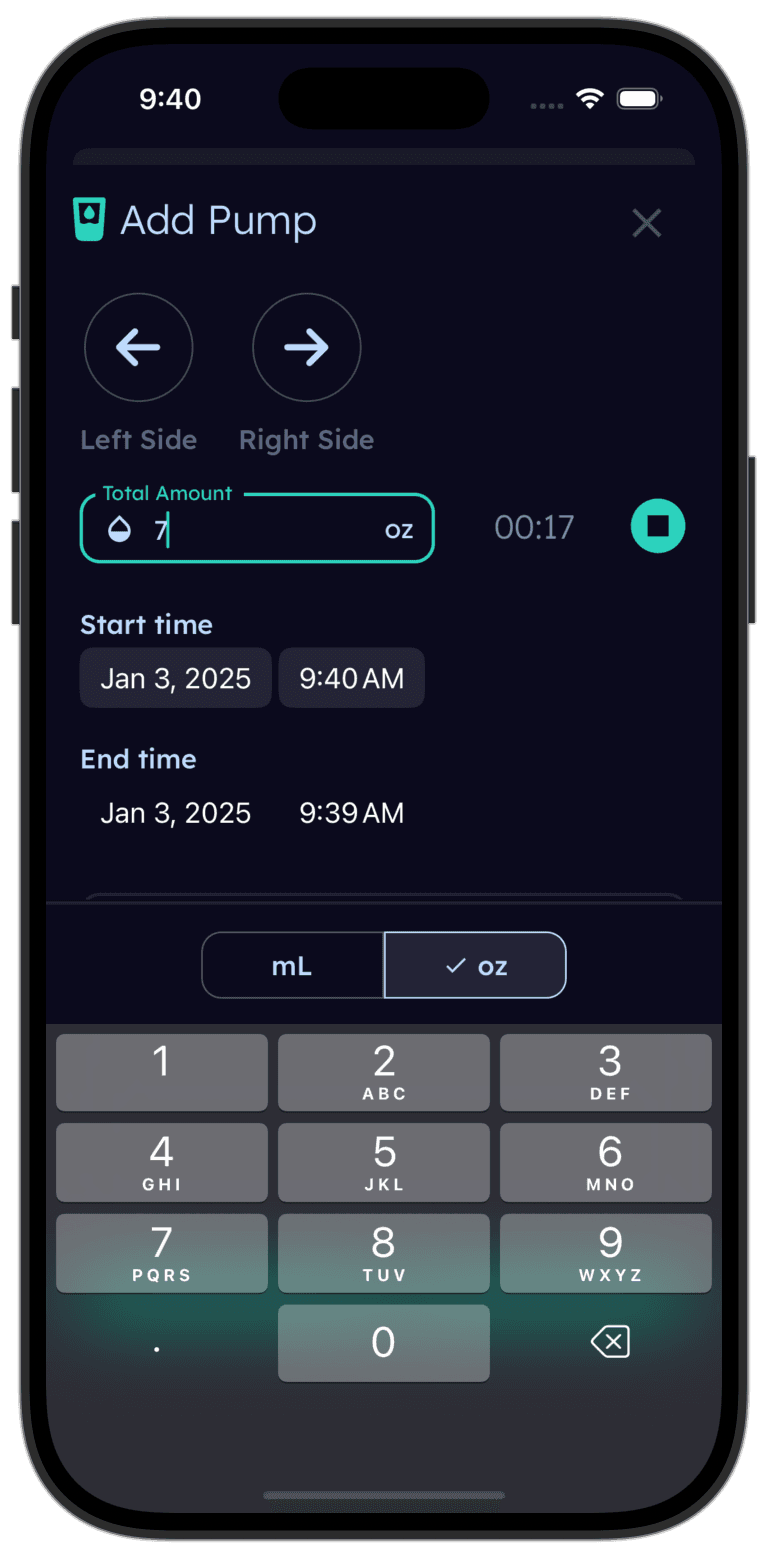
Tinylog pumping log showing session output and daily totals

Is your supply strategy working? The trends tell the truth.

Log every pump session in Tinylog — regular and power pump — with output volume and duration. Then look at your daily and weekly trends. A supply increase from power pumping shows up as a gradual upward trend in daily totals over 3-7 days. Without tracking, you're guessing.

Download on the App StoreGet It On Google Play

The Power Pumping Protocol — Step by Step

Here's how to do a power pumping session correctly. Choose one regular pump session to replace — ideally your morning session or whenever your output tends to be highest. Set aside 60 uninterrupted minutes.

Pump for 20 minutes. Don't worry about output — just let the pump do its thing. Rest for 10 minutes. No pumping, no stimulation. Let your breasts refill partially. Pump for 10 minutes. Output will likely be less — that's normal. Rest for 10 minutes. Another pause. Pump for 10 minutes. Final stimulation cycle.

Do this once per day for 3-7 days. Continue your regular pump schedule for all other sessions. Track your total daily output (not just the power pump session) and look for an upward trend over the week. If you see improvement, continue for up to 2 weeks. If not, stop and consult a lactation consultant.

One important note: the output during the actual power pump session may be disappointing. The rest periods mean less total suction time, and your breasts may not have fully refilled between mini-sessions. That's fine — the goal isn't maximum immediate output. The goal is sending a demand signal. The supply increase shows up in the days following, not during the session itself.


When to Use Each Strategy

Use regular pumping as your daily routine, always. This is non-negotiable if you're exclusively pumping or pumping at work. Aim for 6-10 sessions per day in the first 12 weeks, and you can gradually reduce to 4-6 after supply is established.

Add power pumping when you notice your daily output declining, when you want to build a freezer stash, or when returning to work and needing to boost supply to cover workday bottles. Use it as a 1-2 week intervention, not a permanent change.

Don't use power pumping if your supply is already adequate — unnecessary demand can lead to oversupply, which comes with its own set of problems (engorgement, increased clogged duct risk, and discomfort). If you're pumping around a work schedule, our pumping schedule for working parents covers how to fit sessions into your day.

Tips That Apply Either Way

Track daily totals, not individual sessions

Power pumping will likely produce less output per session than regular pumping — that's expected. What matters is whether your total daily output trends upward over the next 3-7 days. Log every session in a tracking app and look at the daily total trend line, not individual session numbers.

Power pump in the morning

Prolactin levels are highest in the early morning, so a power pump session between 1 AM and 6 AM (or your first morning pump) is likely to be the most productive. If that timing doesn't work, any consistent time is fine — but morning generally gives the strongest physiological boost.

Don't power pump indefinitely

Power pumping is a 1-2 week intervention, not a permanent schedule change. If you haven't seen improvement after 2 weeks, continuing won't help. Consult a lactation consultant about other strategies — galactagogues, pump settings, flange sizing, or underlying supply issues.

Related Guides

Sources

  • Kent, J. C., et al. (2012). Principles for Maintaining or Increasing Breast Milk Production. Journal of Obstetric, Gynecologic & Neonatal Nursing, 41(1), 114-121.
  • Hill, P. D., et al. (2005). Initiation and Frequency of Pumping and Milk Production in Mothers of Non-Nursing Preterm Infants. Journal of Human Lactation, 21(1), 22-27.
  • Morton, J., et al. (2009). Combining Hand Techniques with Electric Pumping Increases Milk Production in Mothers of Preterm Infants. Journal of Perinatology, 29(11), 757-764.
  • Academy of Breastfeeding Medicine. (2017). ABM Clinical Protocol #3: Supplementary Feedings in the Healthy Term Breastfed Neonate.

This guide is for informational purposes only and is not a substitute for professional medical advice. Consult your pediatrician for guidance specific to your baby.

Get this comparison in your inbox.
Save this guide so you have the power pumping protocol ready when you need it.
Supply trends don't show up in a single session — they show up in the data.
Use Tinylog to track daily pump output and see whether your supply strategy is working.
Download on the App StoreGet It On Google Play