GUIDE

Breast Milk vs. Donor Milk

Mother's own milk is the gold standard for nutrition and immune protection. Pasteurized donor milk retains most nutritional value but loses some bioactive components. Both are superior to formula for premature and high-risk infants.

Donor milk fills a critical gap — especially in the NICU. Here's how it compares and when it matters most.

Track every feeding source

Log breast milk, donor milk, and formula feeds

Milk from a parent or donor is the ideal source of nutrients for a baby because their body metabolizes it best.
Dr. Hannah R. FischerDr. Hannah R. Fischer, MD, Neonatologist, Norton Children's Neonatology

When Your Own Milk Isn't Enough — Yet

For most families, the breast milk vs. donor milk question arises in one specific context: the NICU. A baby arrives early, the mother's body hasn't had time to establish full supply, and the baby needs human milk now — not in a week when pumping catches up. Donor milk fills that gap.

The clinical evidence for donor milk in premature infants is strongest around necrotizing enterocolitis (NEC), a devastating intestinal condition that primarily affects very premature babies. A Cochrane review (Quigley et al., 2019) found that formula feeding is associated with a higher risk of NEC compared to donor human milk. For a condition with mortality rates of 20-30%, this difference matters. It's the primary reason over 70% of US NICUs now use donor milk.

But donor milk isn't equivalent to mother's own milk, and understanding the differences helps families make informed decisions and set realistic expectations. Even the earliest milk matters — colostrum, produced in the first days postpartum, provides concentrated immune factors that are especially critical for premature infants. Holder pasteurization — the standard method used by accredited milk banks — heats milk to 62.5 degrees C for 30 minutes. This kills bacteria and viruses, making the milk safe. But it also reduces or destroys some of the most valuable bioactive components: IgA antibodies drop by roughly 70%, lactoferrin by about 60%, and live immune cells are eliminated entirely.


Mother's Own Milk vs. Donor Milk
Immune factors
Mother's Own MilkFull complement of antibodies (IgA, IgG, IgM), live white blood cells, lysozyme, and lactoferrin. Tailored to baby's environment.
Pasteurized Donor MilkIgA reduced ~70% by pasteurization. Lactoferrin reduced ~60%. Live white blood cells destroyed. Some lysozyme preserved.
Macronutrients
Mother's Own MilkProtein, fat, and carbohydrate content adapts to baby's age and needs. Composition changes within a single feed.
Pasteurized Donor MilkMacronutrients largely preserved through pasteurization. But donor milk is pooled, so composition reflects the average of multiple donors.
Human milk oligosaccharides (HMOs)
Mother's Own Milk200+ types, specific to the mother. Act as prebiotics and direct immune modulators.
Pasteurized Donor MilkHMOs are partially preserved through pasteurization. Structure and function may be altered.
Safety screening
Mother's Own MilkProduced by the baby's own mother. No screening needed unless mother has specific infections.
Pasteurized Donor MilkDonors screened for HIV, hepatitis, syphilis, HTLV, and lifestyle factors. Milk is pasteurized and bacteriologically tested.
Availability
Mother's Own MilkDependent on mother's supply and ability to express. Can be limited by medical conditions, medications, or stress.
Pasteurized Donor MilkAvailable from milk banks when prescribed. May be limited by supply, cost, and geographic access.
Cost
Mother's Own MilkFree at the source. Indirect costs include pumping equipment and lactation support.
Pasteurized Donor Milk$4-$6 per ounce from accredited milk banks. Often provided free in NICUs. Outpatient cost can be substantial.
NEC prevention
Mother's Own MilkStrongest evidence for NEC prevention in premature infants. The gold standard.
Pasteurized Donor MilkAlso associated with lower NEC rates compared to formula, though the evidence is slightly less strong than for mother's own milk.
Donor milk is nutritionally valuable but immunologically diminished compared to raw mother's milk. Both are superior to formula for premature infants.

Mother's Own Milk Advantages

  • Full, unaltered immune protection — antibodies tailored to the baby's specific environment
  • Composition adapts in real time to baby's age, time of day, and immune needs
  • Strongest evidence for NEC prevention in premature infants
  • Contains live cells, beneficial bacteria, and stem cells not present in any other food source
  • Free and available as long as supply is adequate

Even small volumes of mother's own milk provide immune benefits that donor milk cannot fully replicate.

Mother's Own Milk Challenges

  • Dependent on mother's ability to produce — medical conditions, stress, and medications can limit supply
  • NICU mothers may struggle to establish supply when separated from baby or after traumatic birth
  • Requires pumping infrastructure and support, especially for NICU families
  • Supply can be unpredictable in early postpartum, particularly for preterm mothers

Supply challenges in the NICU are common and expected. Early, aggressive pumping with lactation support gives the best chance of establishing supply.

Donor Milk Advantages

  • Provides breast milk nutrition when mother's own milk is unavailable or insufficient
  • Lower NEC rates compared to formula — the primary reason NICUs use it
  • Rigorously screened and pasteurized when sourced from accredited milk banks (HMBANA)
  • Bridges the gap while mother's supply is being established
  • Better tolerated than formula by premature infants' immature digestive systems

Donor milk is a critical bridge, especially for premature infants at risk of NEC.

Donor Milk Challenges

  • Pasteurization significantly reduces immune components — not equivalent to raw mother's milk
  • Expensive when purchased outpatient — $4-$6 per ounce adds up quickly
  • Pooled milk doesn't adapt to individual baby's needs like mother's own milk does
  • Availability can be limited — milk banks sometimes face supply shortages
  • Informal milk sharing carries risks if donors aren't properly screened

The key distinction is between accredited milk banks (safe, screened) and informal sharing (variable safety).

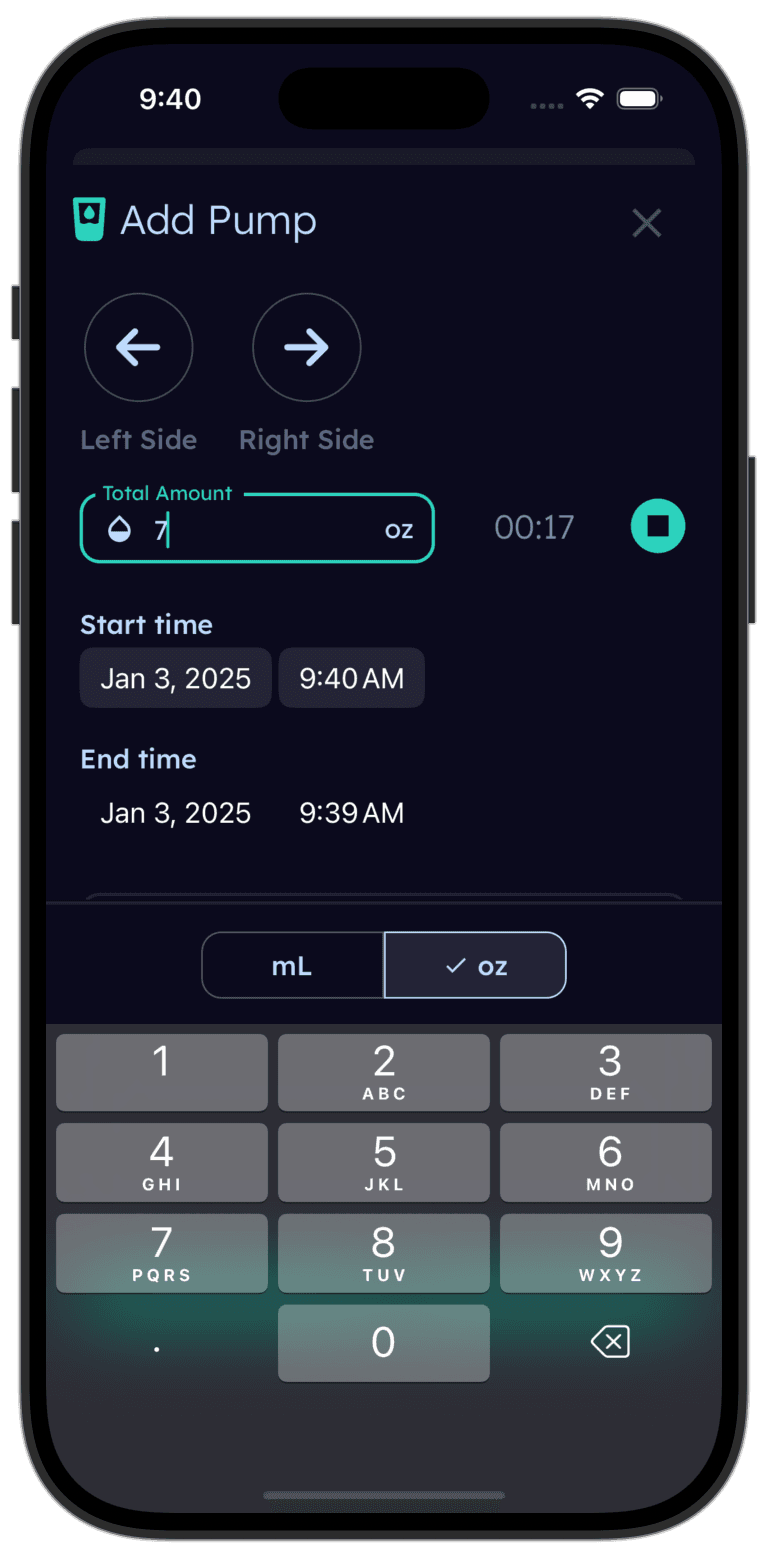
Tinylog feeding log showing different milk source tracking

Managing multiple milk sources? Keep it all in one place.

Tinylog lets you log breast milk, donor milk, and formula feeds separately — so you and your NICU team can see exactly what baby is receiving, track the transition as your own supply builds, and have a clear feeding history for rounds and discharge planning.

Download on the App StoreGet It On Google Play

Informal Milk Sharing: The Risks You Should Know

Donor milk from accredited milk banks is screened and pasteurized. Informal milk sharing — through Facebook groups, online platforms, or personal networks — is not. Research published in Pediatrics (Keim et al., 2015) found that 74% of informally shared milk samples contained detectable bacteria, including some with pathogenic species. Some samples tested positive for drugs and cow's milk contamination.

This doesn't mean every informally shared milk sample is dangerous. Many peer-to-peer donors are healthy, well-intentioned mothers with excess supply. But without systematic screening and pasteurization, there's no way to verify safety. For premature or immunocompromised babies, the risk calculus is clear: use accredited milk banks.

For healthy, term babies whose mothers simply want to supplement with human milk instead of formula, the risk-benefit calculation is less clear-cut. Some families choose informal sharing after doing their own donor screening (requesting blood test results, health history). This is a personal decision, but it should be an informed one.

Making the Decision for Your Family

If your baby is in the NICU and your supply is limited, the answer is straightforward: mother's own milk first (every drop counts), donor milk to supplement, and formula only if neither is available. Focus on establishing your supply with early, frequent pumping and lactation support — our guide on increasing milk supply covers evidence-based strategies. Most NICU mothers see their supply increase over the first 1-2 weeks.

If your baby is healthy and term, and you're considering donor milk as an alternative to formula, weigh the cost ($4-$6/oz from a milk bank) against the benefits. Pasteurized donor milk retains nutritional advantages over formula but has reduced immune function compared to your own milk. For many families, combination feeding with their own breast milk and formula is more practical and sustainable.

Tips That Apply Either Way

Mother's own milk first, always

If you're in the NICU and your supply is limited, every drop of your own milk matters more than volume. Even small amounts of colostrum provide immune factors that donor milk cannot fully replicate. Ask for lactation support early and often — NICU lactation consultants specialize in exactly this situation.

Use accredited milk banks

If you need donor milk, use a Human Milk Banking Association of North America (HMBANA) accredited milk bank. These banks screen donors, pasteurize milk, and test for bacteria. Informal milk sharing through Facebook groups or online platforms skips these safeguards and carries real infection risk.

Track every source

NICU families often manage three feeding sources — mother's own milk, donor milk, and fortifier or formula. Logging which feeds come from which source helps you and your care team monitor the transition from donor milk to mother's own milk as supply builds.

Related Guides

Sources

  • Quigley, M., et al. (2019). Formula versus Donor Breast Milk for Feeding Preterm or Low Birth Weight Infants. Cochrane Database of Systematic Reviews, 7, CD002971.
  • Keim, S. A., et al. (2015). Microbial Contamination of Human Milk Purchased via the Internet. Pediatrics, 132(5), e1227-e1235.
  • Peila, C., et al. (2016). The Effect of Holder Pasteurization on Nutrients and Biologically-Active Components in Donor Human Milk. Nutrients, 8(8), 477.
  • Human Milk Banking Association of North America (HMBANA). (2024). Standards for Donor Human Milk Banking.
  • American Academy of Pediatrics. (2017). Donor Human Milk for the High-Risk Infant. Pediatrics, 139(1), e20163440.

This guide is for informational purposes only and is not a substitute for professional medical advice. Consult your pediatrician for guidance specific to your baby.

Get this comparison in your inbox.
Save this guide for reference — especially helpful for NICU families managing multiple feeding sources.
When you're managing multiple milk sources, tracking keeps it straight.
Use Tinylog to log which feeds are breast milk, donor milk, or formula — so you and your care team see the full picture.
Download on the App StoreGet It On Google Play