
GUIDE
Earth's Best vs. Happy Baby Organic Formula
Published on ·Updated on
Both are USDA-certified organic. The differences come down to sugar sources, prebiotic content, DHA sourcing, and price — not a meaningful nutritional gap.
Organic formula is one of the fastest-growing segments of the infant formula market. Earth's Best (Hain Celestial) and Happy Baby (Nurture Inc.) are two of the most popular options. Here's what's actually different between them — and whether going organic matters as much as the labels suggest.
Free 2-min quiz. Personalized match plus an instant recall check.
“All infant formulas must meet requirements that ensure optimal nutrition for babies. If your baby's formula is sold in the U.S., it has the nutrients your baby needs.”
 Dr. Matthew Badgett, MD, Pediatrician, Cleveland Clinic
What USDA Organic Actually Means on a Formula Can
When you see the USDA Organic seal on a can of infant formula, here's what it means in practice: at least 95% of the ingredients by weight are organically produced. For formula, that primarily means the lactose comes from organic milk, and the vegetable oils are organically sourced.
What it doesn't cover is equally important. The vitamins, minerals, amino acids, DHA, ARA, taurine, nucleotides, and other micronutrients in organic formula are the same synthetic forms used in conventional formula. Organic versions of these nutrients don't exist in a form that can be added to formula. So when you compare the ingredient list of an organic formula to a conventional one, the organic ingredients are the bulk items — milk and oils — while the long list of added nutrients is identical.
This isn't a knock on organic formula. It's a clarification. Organic certification reflects agricultural sourcing practices, not a different nutritional standard. The FDA applies the same 21 CFR 107 requirements to organic and conventional formulas alike.
| Feature | Earth's Best | Happy Baby | Notes |
|---|---|---|---|
| Manufacturer | Hain Celestial Group | Nurture Inc. (acquired by Else Nutrition) | Both are established natural/organic food companies |
| USDA Organic | Yes | Yes | Both are USDA-certified organic |
| Protein source | Organic nonfat milk, organic whey protein concentrate | Organic nonfat milk, organic whey protein concentrate | Same protein base |
| Primary carbohydrate | Organic lactose | Organic lactose | Both use lactose — the sugar naturally found in breast milk |
| Fat sources | Organic palm olein, organic soy, organic coconut, organic high oleic sunflower oils | Organic palm olein, organic soy, organic coconut, organic high oleic safflower oils | Very similar organic oil blends |
| DHA / ARA source | C. cohnii oil (algal DHA), M. alpina oil (fungal ARA) | C. cohnii oil (algal DHA), M. alpina oil (fungal ARA) | Same DHA/ARA sourcing |
| Prebiotics | Fructooligosaccharides (FOS) | Galactooligosaccharides (GOS) + Fructooligosaccharides (FOS) | Happy Baby has a dual-prebiotic blend |
| Probiotics | No | Select formulations include B. lactis | Happy Baby has an edge here for probiotic-interested parents |
| Iron-fortified | Yes | Yes | Both meet FDA iron requirements |
The Real Differences Between These Two
Looking at the comparison table, you'll notice that Earth's Best and Happy Baby are more alike than different. Both use organic lactose, organic milk protein, and similar organic oil blends. Both include DHA and ARA from the same sources. Both are iron-fortified and USDA-certified organic.
The meaningful differences are subtle. Happy Baby includes a dual-prebiotic blend (GOS and FOS) compared to Earth's Best's single prebiotic (FOS). Some Happy Baby formulations also include the probiotic B. lactis. If gut health support is a priority for you, Happy Baby has a slight edge in this area.
On the other hand, Earth's Best has been on the market longer and has a more established track record. Some parents prefer its slightly simpler ingredient list. Both formulas are well-regarded, and neither has a significant nutritional advantage over the other.
If your baby tolerates one well, there's no evidence-based reason to switch to the other. If you're choosing for the first time, the decision is genuinely a coin flip from a nutrition standpoint.
| Item | Earth's Best | Happy Baby | Conventional (Store Brand) |
|---|---|---|---|
| Price per can (powder, ~21 oz) | $28-33 | $30-36 | $18-25 (store brand) |
| Estimated monthly cost | $112-132 | $120-144 | $72-100 |
| Estimated yearly cost | $1,344-1,584 | $1,440-1,728 | $864-1,200 |
| Premium over conventional (yearly) | $480-384 | $576-528 | — |
What the Marketing Doesn't Tell You
The organic formula market has grown rapidly, fueled by parental anxiety and some very effective marketing. Here's what the labels don't make clear:
"Organic" on formula mostly means organic lactose and organic oils. The nutritional profile — the part that actually matters for your baby's growth and development — is the same as conventional formula. The FDA requires it to be.
The word "organic" carries an emotional weight that exceeds its practical impact on infant formula. When parents choose organic formula, they're often responding to a broader concern about pesticides, environmental practices, and food purity. These are legitimate values. But the specific health benefit to your baby, compared to conventional formula, has not been demonstrated in research.
Both Earth's Best and Happy Baby market heavily on the "clean" and "pure" angle. Their packaging emphasizes what's not in the formula (no artificial growth hormones, no GMOs) as much as what is. These are true statements — but they apply to essentially all US infant formula, organic or not. Conventional formulas also don't contain artificial growth hormones, and the impact of GMO-sourced ingredients in formula has not been shown to affect infant health outcomes.
The premium you pay for organic formula — $400-600 per year over conventional — is a reasonable expense if organic sourcing aligns with your values. It is not a premium that buys better nutrition for your baby. For more on how store-brand formulas compare to name brands, see our Kirkland vs. name brand formula guide.
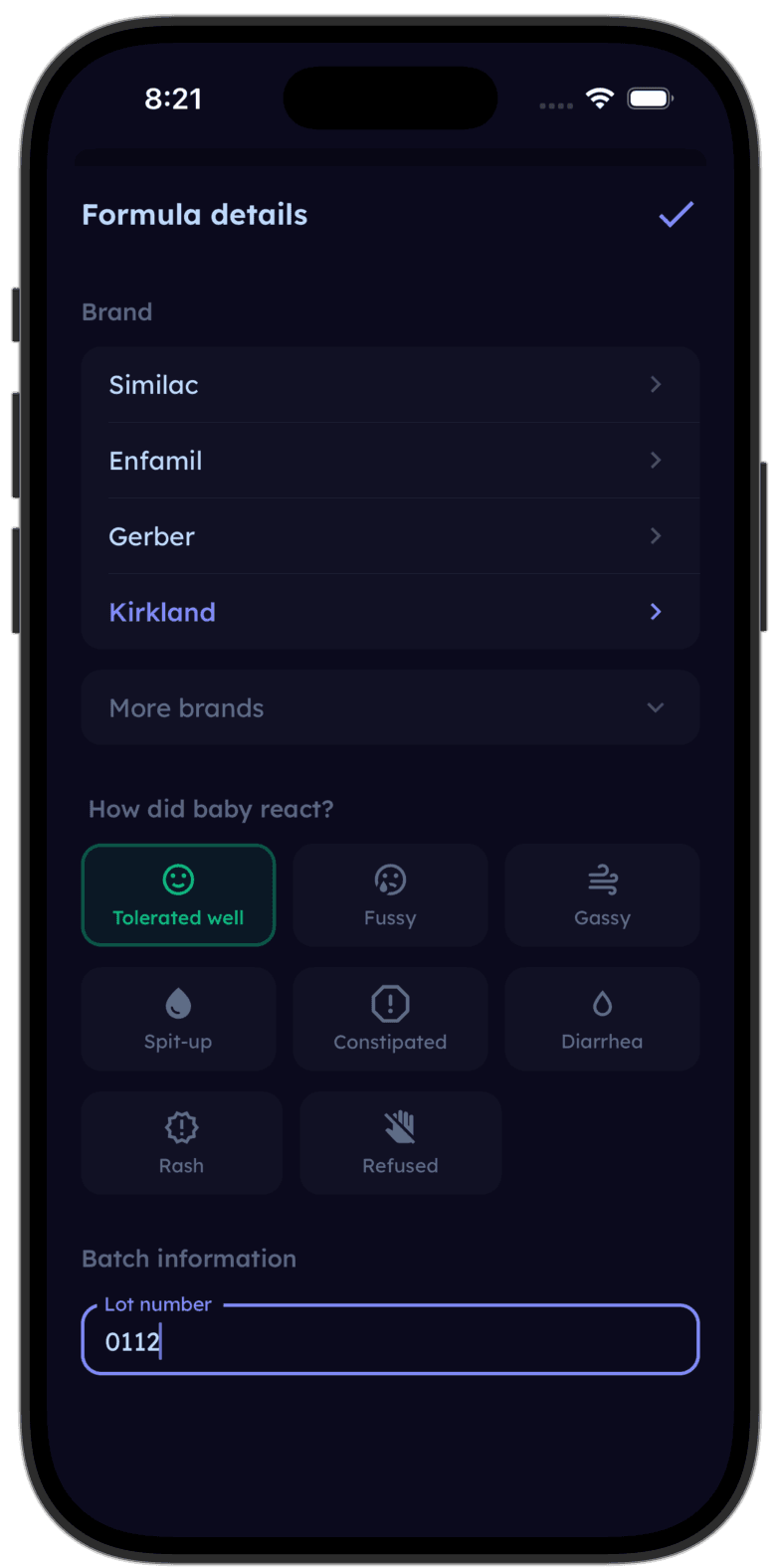
See how your baby responds to the organic formula you chose.
Log each bottle, note any fussiness or stool changes, and see the pattern over time. Whether you pick Earth's Best or Happy Baby, you'll know within the first week if it's working — and have real data ready if your pediatrician asks.


Does Organic Formula Actually Make a Difference?
The honest answer, based on current evidence: probably not in a way that affects your baby's health outcomes.
A 2012 American Academy of Pediatrics clinical report on organic foods concluded that there is insufficient evidence that organic diets lead to improved health or lower disease risk in children. The report noted that organic produce does reduce pesticide exposure, but the health significance of this reduction is unclear.
Applied to formula specifically, the picture is even simpler. The organic components of formula are the milk-derived lactose and the vegetable oils. The rest — the vitamins, minerals, amino acids, and specialty ingredients that make formula nutritionally complete — are identical regardless of organic certification.
No published study has demonstrated that babies fed organic formula have different growth outcomes, different immune function, or different long-term health markers compared to babies fed conventional formula. If such evidence existed, the AAP would recommend organic formula. They don't.
This doesn't mean organic formula is a waste of money. If reducing your baby's exposure to conventionally farmed dairy and oils matters to you as a family value, organic formula delivers on that. Just understand what you're getting and what you're not.
Signs Your Baby Is Tolerating Their Formula Well
- Baby continues to eat expected volumes without increased refusal
- Diaper output stays consistent — 6+ wet diapers per day
- No new rash, hives, or unusual fussiness lasting more than a few days
- Stool consistency may change briefly but stabilizes within a week
- Weight gain continues on track
These signs apply regardless of whether you're using organic or conventional formula. What matters is how your baby responds, not what's on the label.
When to Talk to Your Pediatrician
The organic vs. conventional decision doesn't usually require medical input. But there are formula-related situations where you should loop in your pediatrician:
Your baby shows signs of formula intolerance — persistent vomiting, diarrhea, blood in stool, or a rash — regardless of whether you're using organic or conventional formula. These symptoms suggest a protein sensitivity, not an organic sourcing issue, and may require a hypoallergenic formula.
You're considering switching formula types (not just brands) — for example, moving from milk-based to soy-based or from standard to goat milk formula. Your pediatrician can help you determine whether the switch is warranted.
Your baby isn't gaining weight appropriately — this is a feeding concern, not a brand concern. See our guide on adequate intake for signs to watch for.
You're feeling pressured to use organic formula and it's straining your budget. Formula is expensive enough without adding a premium that doesn't change the nutritional outcome. Your pediatrician can reassure you that conventional formula meets your baby's needs.
The Bottom Line
Earth's Best and Happy Baby are both solid organic formula options that meet the same FDA standards as every other infant formula on the market. The differences between them are minor — Happy Baby has a slight edge in prebiotic and probiotic content, while Earth's Best has a longer market presence and sometimes a slightly lower price.
The bigger question — whether organic formula is worth the premium over conventional — comes down to your values, not your baby's nutritional needs. The evidence does not support a health benefit from organic formula specifically. If organic sourcing matters to your family, either of these formulas is a fine choice. If budget is a concern, conventional formula provides the same nutrition at a lower price point.
Your baby will grow and thrive on either one. Choose based on what matters to you, and don't let marketing language create guilt around a decision that, nutritionally, is a wash.
Whichever organic formula you pick, tracking feeds and watching for any changes in the first 1–2 weeks gives you real data instead of uncertainty. Tinylog lets you log bottles, note stool changes or fussiness, and see the pattern clearly. Free to try, takes about 10 seconds per feed. Once you've made your choice, sign up for free recall alerts so you'll be notified immediately if your formula is ever recalled.
Related Guides
-
Best Organic Formulas — Honest, evidence-based rankings
-
Best Baby Formulas 2026 — An evidence-based guide
Sources
- U.S. Food and Drug Administration — 21 CFR 107: Infant Formula Requirements
- USDA National Organic Program — Organic Certification Standards
- American Academy of Pediatrics — "Organic Foods: Health and Environmental Advantages and Disadvantages." Pediatrics, 2012.
- Forman J, et al. "Organic Foods: Health and Environmental Advantages and Disadvantages." AAP Clinical Report, Pediatrics, 2012.
- Hain Celestial Group — Earth's Best Organic Infant Formula product specifications
- Nurture Inc. — Happy Baby Organics Infant Formula product specifications
This guide is for informational purposes only and is not a substitute for professional medical advice. If you have concerns about your baby's formula or nutrition, please consult your pediatrician.
Frequently asked questions
- Is Earth's Best or Happy Baby formula better?
- Neither is objectively better. Both are USDA-certified organic and meet the same FDA nutritional requirements. Earth's Best uses lactose as the primary carbohydrate and includes DHA/ARA from egg-derived sources. Happy Baby also uses lactose, includes a prebiotic blend, and sources DHA from algal oil. The best choice depends on your baby's tolerance and your ingredient preferences.
- Is organic baby formula worth the extra cost?
- The evidence that organic formula produces better health outcomes than conventional formula is limited. 'Organic' on formula primarily means the lactose and oils are organically sourced. The nutritional profile — the vitamins, minerals, and macronutrients your baby actually needs — is the same as conventional formula because the FDA requires it. If organic sourcing matters to you for environmental or personal reasons, that's a valid choice. But it is not a nutritional necessity.
- Does Happy Baby formula have probiotics?
- Yes. Happy Baby Organic Infant Formula includes a prebiotic blend (galactooligosaccharides and fructooligosaccharides) designed to support gut bacteria. Some formulations also include added probiotics. Earth's Best includes prebiotics (FOS) as well but has a simpler prebiotic profile.
- Can I switch between Earth's Best and Happy Baby?
- Yes. Both are standard milk-based organic formulas that meet the same FDA requirements. Most babies can switch between them without issues. If your baby has a sensitive stomach, consider a gradual transition over 3-5 days by mixing the two formulas.
- What does USDA organic actually mean on formula?
- USDA Organic certification on infant formula means that at least 95% of the ingredients are organically produced — primarily the lactose (from organic milk) and the vegetable oils. The vitamins, minerals, amino acids, and other required nutrients are the same synthetic forms used in conventional formula, because organic versions of these micronutrients do not exist.