
GUIDE
Kendamil vs. Enfamil
Published on ·Updated on
Both formulas contain MFGM — but from different sources. Kendamil gets it naturally from whole milk cream. Enfamil adds it from milk fat concentrate. Kendamil avoids palm oil; Enfamil uses palm olein. The biggest practical difference may be the price.
Kendamil and Enfamil represent two formulation philosophies arriving at a similar destination through different routes. Both include MFGM, both use lactose as the primary carbohydrate, and both meet the same FDA requirements. But the how matters to many parents — and so does the $25-$50 monthly price difference.
Log formula and bottles
“All infant formulas must meet requirements that ensure optimal nutrition for babies. If your baby's formula is sold in the U.S., it has the nutrients your baby needs.”
 Dr. Matthew Badgett, MD, Pediatrician, Cleveland Clinic
The Honest Starting Point
Kendamil and Enfamil are an interesting comparison because they share something unusual: both formulas include MFGM (milk fat globule membrane), a bioactive component of breast milk. But they get there through completely different routes. Kendamil's MFGM occurs naturally because the formula starts with whole milk — the cream contains MFGM as part of its structure. Enfamil adds MFGM from a milk fat concentrate ingredient to its standard skim-milk-plus-whey base.
This single difference — whole milk vs. skim plus whey plus added MFGM — captures the broader philosophical divide between these two brands. Kendamil's approach is "use the whole ingredient and get the bioactives naturally." Enfamil's approach is "separate the components, optimize each one, and add targeted bioactives." Both are legitimate formulation strategies.
And both, critically, meet the same FDA nutritional requirements under 21 CFR 107. The FDA sets minimum and maximum levels for 29 nutrients. Kendamil and Enfamil both meet those standards. Your baby will receive complete nutrition from either formula. For a look at the overall formula landscape, see our best baby formulas guide.
| Feature | Kendamil Classic | Enfamil NeuroPro | What It Means |
|---|---|---|---|
| Manufacturer | Kendal Nutricare (UK, est. 1962) | Reckitt / Mead Johnson (USA) | Kendamil has been making formula in the English Lake District for over 60 years. Mead Johnson (now owned by Reckitt) has been a dominant US formula maker for over a century. |
| Milk base | Whole milk (includes cream) | Nonfat milk + whey protein concentrate | Core difference. Kendamil keeps the cream in; Enfamil separates the milk and adds whey to adjust the protein ratio. |
| MFGM source | Natural — present in the whole milk cream | Added — from a milk fat concentrate ingredient | Both deliver MFGM. Kendamil's comes inherently from the milk base; Enfamil's is added as a targeted ingredient. The end result for your baby is similar. |
| Carbohydrate source | Lactose | Lactose | Same primary carbohydrate in standard lines. |
| Fat sources | Whole milk fat + coconut, rapeseed, sunflower oils. No palm oil. | Palm olein, soy, coconut, high oleic sunflower oils | Key difference. Enfamil uses palm olein; Kendamil does not. Some research links palm olein to harder stools and slightly lower calcium absorption. |
| DHA source | Plant-based algal oil | Algal and fungal oils (Crypthecodinium cohnii, Mortierella alpina) | Both use algal-sourced DHA. Kendamil markets plant-based sourcing; Enfamil uses both algal and fungal sources for DHA/ARA. |
| Organic options | Yes — Kendamil Organic (EU and USDA certified) | Limited — Enfamil has offered organic lines but they are less prominent | Kendamil offers a more established organic option for parents who want organic certification. |
| Price per oz (prepared) | ~$1.70-$2.00 | ~$1.10-$1.30 | Enfamil costs significantly less. This is the most impactful practical difference for most families. |
| Availability | Amazon, Target, specialty retailers | Virtually everywhere — grocery stores, pharmacies, big box, online | Enfamil wins on availability by a wide margin. Kendamil's retail presence is growing but still limited. |
| WIC eligible | No | Yes (specific products vary by state) | For WIC families, Enfamil is the accessible option. |
The Ingredient Differences That Actually Matter
There are three areas where Kendamil and Enfamil genuinely diverge: how they deliver MFGM, their fat sources (the palm oil question), and the overall protein structure. These differences are real and worth understanding.
MFGM: natural vs. added
Both formulas provide MFGM, but the delivery mechanism differs. In Kendamil, MFGM is part of the milk fat globule structure that exists naturally in whole milk cream. The fat globules are surrounded by a membrane containing phospholipids, sphingomyelin, and glycoproteins. When Kendamil uses whole milk, these structures come along with the cream.
In Enfamil NeuroPro, the milk is first separated into nonfat milk and whey. MFGM is then added back from a milk fat concentrate ingredient. Enfamil has specifically studied and marketed this addition, citing research (Timby et al., 2014) showing that MFGM-supplemented formula supported cognitive development scores closer to breastfed infants.
Does the source of MFGM matter? Possibly. Some researchers argue that MFGM in its natural globule structure may be more bioavailable than MFGM added as a concentrate. But this hypothesis has not been tested in a direct head-to-head clinical trial comparing Kendamil against Enfamil. Both approaches deliver MFGM to your baby.
The palm oil question
This is the difference that generates the most discussion among parents. Enfamil uses palm olein oil as a primary fat source. Kendamil does not use palm oil in any form.
Some research links palm olein to the formation of calcium soaps in the infant gut, which can lead to harder stools and slightly reduced calcium and fat absorption. A meta-analysis in Food and Nutrition Research found a modest effect on stool consistency. Similac also avoids palm olein and actively markets this distinction.
However, no major health organization has recommended against palm olein in infant formula. The effects are modest, and the clinical significance for healthy babies receiving adequate nutrition is debatable. That said, if your baby tends toward hard stools or constipation on Enfamil, the palm olein difference is worth considering.
Protein structure: whole milk vs. separated
Kendamil's whole-milk base results in a casein-dominant protein ratio (closer to 40:60 whey-to-casein), which is more similar to cow's milk than to breast milk. Enfamil adjusts the ratio by adding whey protein concentrate, targeting a more whey-dominant profile closer to mature breast milk (approximately 60:40).
Some parents view Kendamil's whole-milk approach as more "natural" or less processed. Enfamil's adjusted ratio is technically closer to human breast milk composition. Both approaches produce formula that supports healthy infant growth.
What the Marketing Doesn't Tell You
Both brands market effectively. Here is what sits between the lines.
Kendamil's "natural MFGM" sounds better than "added MFGM" — but the clinical difference is unproven. The idea that naturally occurring MFGM in whole milk is superior to MFGM added as a concentrate is scientifically plausible but not demonstrated. No published study has compared developmental outcomes between infants fed whole-milk formula with natural MFGM and infants fed skim-milk formula with added MFGM.
Enfamil's MFGM research is real but limited. The Timby et al. study is a genuinely interesting trial, but it was a single study with 160 infants, modest effect sizes, partial industry funding, and no published long-term follow-up. Using it to market an entire product line as a "brain development" formula oversells the evidence.
The price difference adds up fast. Kendamil Classic costs approximately $25-$35 more per month than Enfamil NeuroPro. Kendamil Organic costs $45-$55 more per month. Over a year of exclusive formula feeding, choosing Kendamil Classic over Enfamil costs roughly $300-$420 extra. Kendamil Organic pushes that to $540-$660. These are ingredient-sourcing and formulation-philosophy premiums, not nutritional-outcome premiums.
Availability is a real practical factor. Enfamil is available at virtually every store that sells baby products — grocery stores, pharmacies, Walmart, Target, Costco, Amazon. Kendamil's US retail presence is growing but still limited to Amazon, Target, and specialty retailers. When you need formula at 2 AM, availability matters more than ingredient philosophy.
WIC eligibility affects millions of families. Approximately half of US infants receive WIC benefits. Enfamil has WIC-eligible products in many states. Kendamil does not. For families relying on WIC, this is not a preference question — it is a financial necessity.
| Product | Typical Price | Cost Per Oz (Prepared) | Monthly Estimate |
|---|---|---|---|
| Kendamil Classic Stage 1 (12.7 oz powder) | $24-$28 | ~$1.70-$2.00/oz prepared | ~$175-$210/month |
| Kendamil Organic Stage 1 (12.7 oz powder) | $28-$33 | ~$1.90-$2.20/oz prepared | ~$195-$230/month |
| Enfamil NeuroPro (20.7 oz powder) | $33-$38 | ~$1.10-$1.30/oz prepared | ~$150-$175/month |
| Store brand (comparable size) | $18-$25 | ~$0.70-$0.90/oz prepared | ~$90-$120/month |
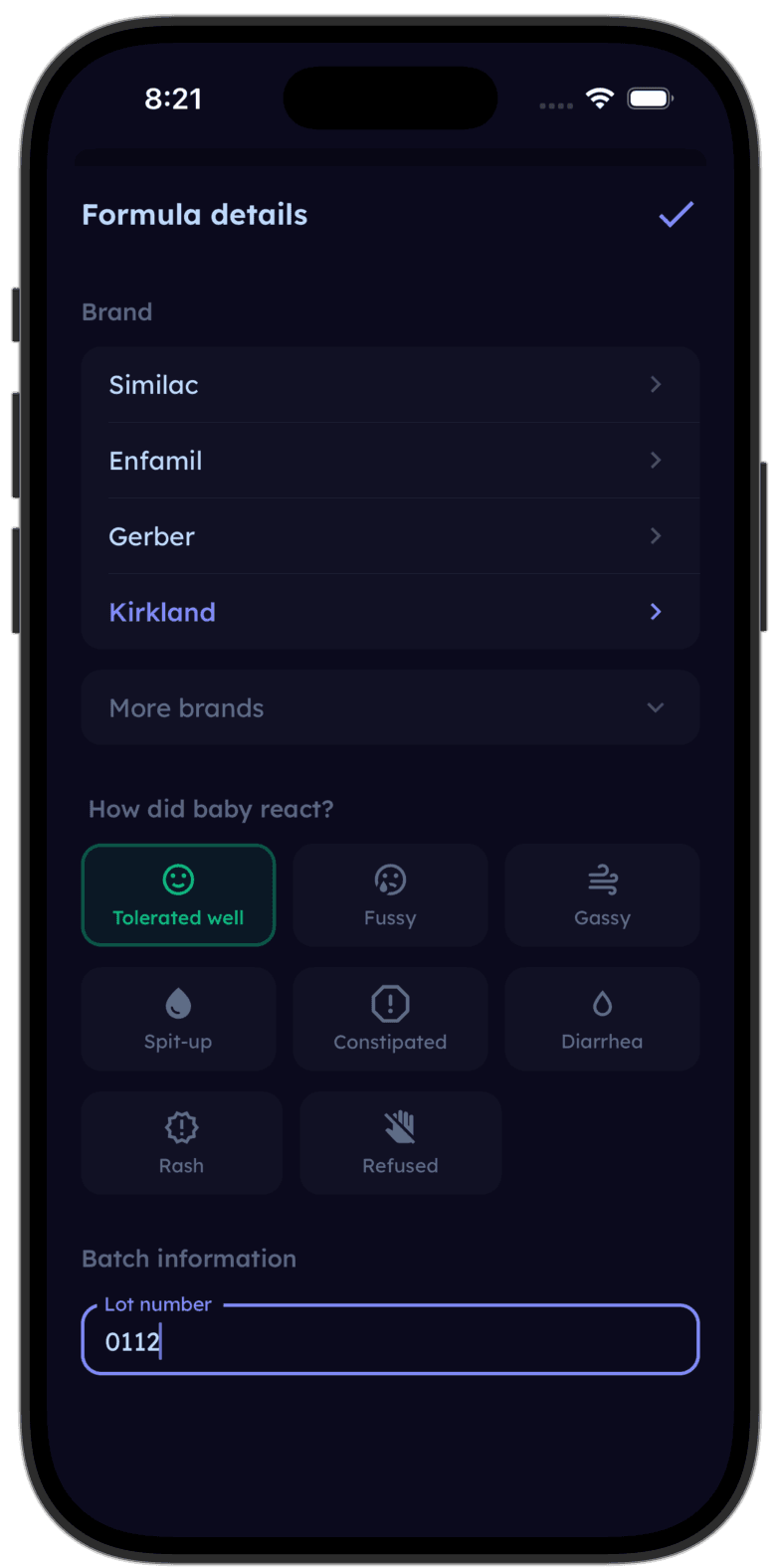
Tinylog tracks formula intake so you can spot what's working.
Log each bottle in seconds — see daily totals, track which formula your baby is on, and have real data ready for your pediatrician.


Taste, Mixing, and Practical Differences
Beyond ingredients, the everyday experience of using these formulas differs in ways that matter to parents.
Taste: Kendamil has a creamier, milder taste that many parents describe as more pleasant than typical formula. The whole-milk base gives it a noticeably different smell and flavor compared to Enfamil. Enfamil has the more standard formula taste familiar to most parents. Babies can have strong taste preferences, and this is a valid reason to choose one over the other.
Mixing: Enfamil NeuroPro powder dissolves relatively easily in room-temperature water. Kendamil can require more vigorous mixing and may produce a thin layer of foam, which is related to the milk fat content. Using a formula pitcher or slightly warm water can help. Neither is difficult to prepare, but Enfamil has a slight edge in mixing convenience.
Stool differences: Parents switching from Enfamil to Kendamil frequently report softer stools, which aligns with the palm olein research — removing palm olein may reduce calcium soap formation and produce softer stool consistency. This is not universal, and individual variation is significant, but it is one of the most commonly reported differences.
Format options: Enfamil offers powder, liquid concentrate, and ready-to-feed formats. Kendamil currently offers only powder in the US market. Ready-to-feed formula is particularly useful for newborns (it is sterile) and for travel or nighttime convenience. This is a practical advantage for Enfamil.
If your baby has issues with constipation on Enfamil, switching to a palm-oil-free formula like Kendamil is a reasonable step to try before moving to a specialty formula.
When to Talk to Your Pediatrician
The choice between Kendamil and Enfamil does not require a doctor's visit for healthy babies. However, talk to your pediatrician if your baby shows any of the following signs.
Signs to Discuss With Your Pediatrician
- Persistent vomiting (not just spit-up) after most feedings
- Blood or mucus in your baby's stool
- Consistently refusing feeds or eating significantly less than expected
- Poor weight gain or weight loss at any point
- Significant and persistent fussiness that does not improve after 1-2 weeks on a new formula
- Signs of allergic reaction: hives, facial swelling, wheezing, or difficulty breathing (seek immediate care)
Most formula discomfort (mild gas, occasional spit-up, minor stool changes) is normal and usually resolves within 1-2 weeks of starting a new formula. Give any new formula adequate time before deciding it is not working. If you are tracking symptoms, bring that data to your appointment.
The Bottom Line
Kendamil and Enfamil both deliver complete infant nutrition, and both include MFGM — just from different sources. The meaningful differences are in the milk base (whole vs. skim plus whey), fat sources (no palm oil vs. palm olein), price, and practical availability.
Choose Kendamil if you prefer the whole-milk formulation philosophy, want natural MFGM from cream rather than an added concentrate, want to avoid palm oil (especially if your baby has hard stools), are comfortable with the premium price, and have reliable access through Amazon or Target.
Choose Enfamil if you want broad availability and format options (including ready-to-feed), need WIC eligibility, prefer the lower price point, want a formula backed by the brand-specific MFGM clinical research (Timby et al.), or simply need the convenience of buying formula anywhere.
Neither choice will shortchange your baby nutritionally. Both meet the same FDA standards. The decision comes down to ingredient philosophy, practical considerations, and budget. If you are switching from one to the other, tracking your baby's feeds, diapers, and comfort for a couple of weeks gives you real data to evaluate the change. Tinylog makes that tracking effortless — a few taps per bottle and you will see the pattern clearly. Whichever brand you choose, sign up for free recall alerts to get notified if your formula is ever recalled.
For more comparisons, see our guides on Kendamil vs. Similac, HiPP vs. Kendamil, and Enfamil vs. Similac.
Related Guides
-
Best Baby Formulas 2026 — An evidence-based guide
-
Kendamil vs. Similac — European-style vs. American formula
-
European vs. American Formula — Real differences explained
Sources
- U.S. Food and Drug Administration. "21 CFR Part 107 — Infant Formula." Code of Federal Regulations.
- American Academy of Pediatrics. "Choosing an Infant Formula." HealthyChildren.org, 2024.
- Timby N, et al. "Neurodevelopment, nutrition, and growth until 12 months of age in infants fed a low-energy, low-protein formula supplemented with bovine MFGM." American Journal of Clinical Nutrition, 2014.
- Koo WW, et al. "Palm olein in infant formula affects bone mineralization and calcium absorption." Journal of the American College of Nutrition, 2006.
- Alarcon PA, et al. "Effect of individual fatty acids on calcium absorption in infant formulas." Food and Nutrition Research, 2017.
- Lonnerdal B. "Bioactive proteins in human milk: health, nutrition, and implications for infant formulas." Journal of Pediatrics, 2016.
- U.S. FDA. "Infant Formula Guidance Documents and Regulatory Information." fda.gov, 2023.
- Kendamil. "Our Story — The English Lake District." kendamil.com.
This guide is for informational purposes only and is not a substitute for professional medical advice. Formula recommendations should be discussed with your pediatrician, especially for babies with allergies, reflux, or other medical conditions.
Frequently asked questions
- Do Kendamil and Enfamil both have MFGM?
- Yes, but from different sources. Kendamil's MFGM occurs naturally because the formula uses whole milk — the cream contains MFGM as part of its natural structure. Enfamil NeuroPro adds MFGM from a milk fat concentrate ingredient. Both deliver MFGM to your baby, but Kendamil positions theirs as a natural byproduct of whole-milk formulation while Enfamil adds it as a targeted bioactive supplement.
- Is Kendamil better than Enfamil for constipation?
- Some parents report softer stools with Kendamil, which may be related to the absence of palm oil. Enfamil NeuroPro uses palm olein oil, and some research links palm olein to harder stools due to calcium soap formation in the gut. However, individual responses vary significantly, and most babies tolerate both formulas without constipation issues. If your baby has persistent constipation, talk to your pediatrician.
- Why is Kendamil more expensive than Enfamil?
- Kendamil is imported from the UK, uses whole milk (which costs more than skim milk), and has a smaller production scale compared to Enfamil, which benefits from massive domestic manufacturing and distribution. The price difference reflects production economics and positioning, not a proportional difference in nutritional quality.
- Is Enfamil NeuroPro WIC-eligible?
- Enfamil has WIC-eligible versions in many states, though the specific products covered vary by state contract. Kendamil is not WIC-eligible. If you rely on WIC benefits for formula purchases, Enfamil is the accessible choice between these two.
- Can I switch from Enfamil to Kendamil without issues?
- Most healthy babies can switch formulas without significant problems. You may notice temporary changes in stool color, consistency, or frequency as your baby adjusts to the different protein and fat sources. A gradual transition — mixing or alternating formulas over several days — can help ease the change. Give the new formula 1-2 weeks before evaluating tolerance.